Article by Mike Freier

Manufacturing is an essential step in a new product launch that requires a thoughtful strategy. In this stage, teams define a manufacturing strategy, create a development schedule, and built units to test.
Your Reliability Engineering Professional Development Site
The Hardware Product Development Lifecycle from Idea to Scale
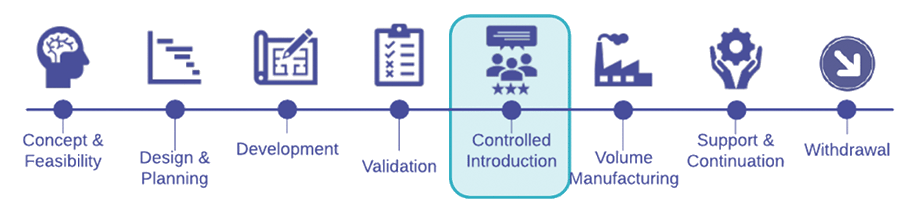
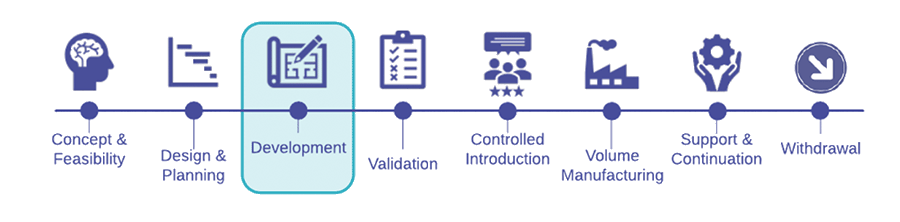
This series describes how hardware products transition from an idea through development, manufacturing, and volume sales to their eventual end of life. Learn how to avoid the pitfalls and risks companies encounter on their way to a successful product launch.In this blog series, a veteran New Product Development and Introduction (NPDI) expert explains how to transition a hardware product from idea to manufacturing at scale and describes each stage in an eight-stage framework for the hardware product development lifecycle: 1.) concept and feasibility 2.) design and planning 3.) development 4.) validation 5.) controlled introduction 6.) volume manufacturing 7.) support and continuation 8.) withdrawal.
Starting with the factors that may affect the creation of your hardware product, leading to determining the feasibility of the desired manufactured item(s). The series next guides readers through the stages of design and planning, development, and validation, explaining how to stay in step with your manufacturing partners. By the end of this series, readers will be ready to transition ideas to manufacturing and ship product(s) in volume. Finally, explore the planning required for product end-of-life to prevent disappointing loyal customers and keep users engaged in your product journey as you evolve new versions with improved functionality.
by Michael Keer Leave a Comment

Article by Mike Freier
In the last blog post, we discussed why Design for Excellence (DfX) is important to your business. Building on several important concepts, this blog will focus on the Product Development phase and discuss how incorporating Agile principles can improve and accelerate your hardware product development process.
[Read more…]by Michael Keer Leave a Comment

Design for Excellence (DfX) is a holistic approach to designing a hardware product that takes into account how the product is made at scale. In addition to understanding your manufacturing plan and target costs, there are six categories to consider: assembly, cost, manufacturing, test, service, and supply chain.
[Read more…]by Michael Keer Leave a Comment

Mapping good ideas to product development is best done in the concurrent engineering framework, a collaborative approach to new product introduction. Using the MVP and the product roadmap, you are now ready to move into balancing design concepts with business concerns like costs.
[Read more…]by Michael Keer Leave a Comment

In the next chapter in our series on taking a hardware product from idea to scale, we move into the Design & Planning stage. Minimal Viable Products (MVP) and roadmaps will help you identify the key features for your new product.
[Read more…]by Michael Keer Leave a Comment

The feasibility phase addresses two questions. First, can your design be made into a manufacturable product? And, second, how will you sell your product and to whom?
Validating the feasibility of manufacturing a new product is the next chapter in our series by Mike Freier on how to take a new hardware product from idea to scale.
[Read more…]by Michael Keer Leave a Comment

In this series on developing a hardware product from idea to scale, we begin with the essential but often overlooked Concept & Feasibility phase. This blog explains the concept half of the process, which addresses the customer, competition, and costs of your product.
[Read more…]by Michael Keer Leave a Comment

Mike Freier, a PRG Partner, authored a series of blogs about how hardware products transition from an idea, through development, manufacturing and volume sales to their eventual end of life. Join us on this journey and learn how to avoid the pitfalls and risks that companies encounter on their way to a successful product launch.
[Read more…]
Ask a question or send along a comment.
Please login to view and use the contact form.