
Guest Post by Bill Pomfret (first posted on CERM ® RISK INSIGHTS – reposted here with permission)
This article will be providing “World Class Maintenance” Best Practices. As I write this article, I like to ask what people are saying about this topic.
Best Maintenance Repair Practices
Several surveys conducted in industries throughout the world have found that 70% of equipment failures are self-induced. Maintenance personnel who are not following what is termed ‘Best Maintenance Repair Practices’ substantially affect these failures. Between 30% and 50% of the self-induced failures are the result of maintenance personnel not knowing the basics of maintenance.
Maintenance personnel who, although skilled, choose not to follow best maintenance repair practices, potentially cause another 20% to 30% of those failures. The existence of this problem has been further validated through the skills assessment process performed in companies throughout the world. This program evaluated the knowledge of basic maintenance fundamentals through a combination of written, identification and performance assessments of thousands of maintenance personnel from a wide variety of industries.
The results indicated that over 90% lacked complete fundamentals of mechanical maintenance. “Best Maintenance Repair Practices” are necessary for maintenance personnel to keep equipment operating at peak reliability and companies functioning more profitably through reduced maintenance costs and increased productivity and capacity.
The potential cost savings can often be beyond the understanding or comprehension of management. Many managers are in a denial state regarding maintenance. The result is that they do not believe that repair practices directly impact an organization’s bottom line or profitability. More enlightened companies have demonstrated that, by reducing the self-induced failures, they can increase production capacity by as much as 20% and thus lower maintenance and total cost.
Other managers accept lower reliability standards from maintenance efforts because they either do not understand the problem or they choose to ignore this issue. A good manager must be willing to admit to a maintenance problem and actively pursue a solution.
You may be asking what the “Best Maintenance Repair Practices” are? Here are a few which maintenance personnel must know:
Looking through this abbreviated “Best Maintenance Repair Practices” table, try to determine whether your company follows these guidelines. The results will very likely surprise you. You may find that the best practices have not been followed in your organization for a long time.
To fix the problem, you must understand that the culture of the organization is at the bottom of the situation. Everyone may claim to be a maintenance expert but the conditions within a plant generally cannot often validate that this is true. To change the organization’s basic beliefs, the reasons why an organization does not follow these best practices in the repair of their equipment must be identified. A few of the most common reasons that a plant does not follow best maintenance repair practices are:
- Leadership does not know what Maintenance and Reliability Best Practices is.
- Management is either not supportive, and/or does not understand the consequences of not following the best practices (real understanding must involve a knowledge of how much money is lost to the bottom line).
- No scorecard which measures the current state of your Maintenance Function.
To solve the problem of not following “Best Maintenance Repair Practices” a sequential course of action should be taken:
1st: Assess the current state of your Maintenance Processes
2nd: Identify whether a problem exists (i.e., Track repetitive equipment failures, review capacity losses in production and identify causes for these losses, measure the financial losses due to repair issues).
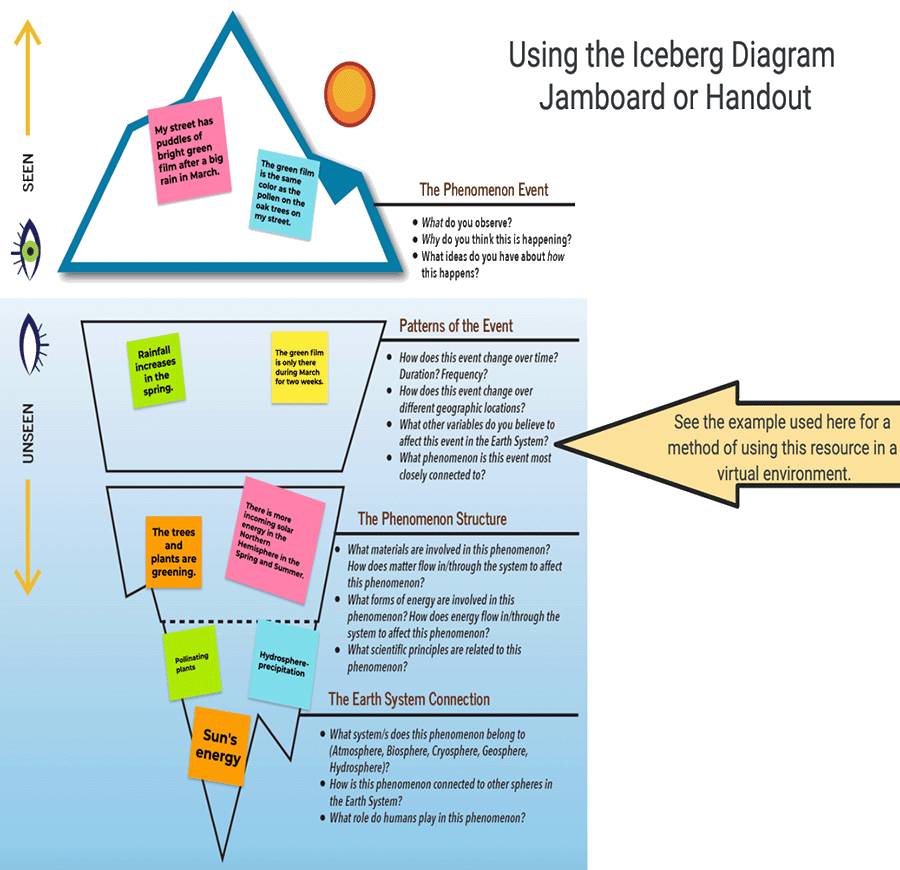
See the Nyman Iceberg diagram below. Example of Problems:
Maintenance is totally reactive and does not follow the definition of maintenance, which is to protect, preserve, and prevent from decline (reactive plant culture).
Maintenance personnel do not have the requisite skills
The maintenance workforce lacks either the discipline or direction to follow best maintenance repair practices.
1st: Performing Preventive Maintenance and Equipment continues to fail
2nd: Maintenance Wrench time is low
3rd: Develop a plan to introduce a proactive maintenance model at the top of planned priorities. This will provide more time for performing maintenance utilizing the “Best Maintenance Repair Practices”.
4th: Perform Skills Assessment (written and performance based) to evaluate whether skill levels are adequate to meet “Best Maintenance Repair Practices” for your specific maintenance organization. (This will require asking your local technical college for assistance)
5th: Maintenance Culture – Provide training to all maintenance and management relative to a change in maintenance strategy and how it will impact them individually (i.e. Increase in profit for the plant, less overtime resulting from fewer equipment breakdowns, etc.). Track and measure the changes and display the results to everyone.
6th: Create a plan and implement the changes needed to move toward following Best Maintenance Repair Practices”
To conclude, as many as 75% of companies in the United States do not follow “Best Maintenance Repair Practices”. The 10% that do follow these practices are realizing the rewards of a well-run, capacity driven organization that can successfully compete in today’s and tomorrow’s marketplace. Remember that use of the “Best Maintenance Repair Practices” might just become a mandatory requirement for the future success of an organization in today’s economy.
Know someone who might be interested in this article? Share it with them.
Bio:
Dr. Bill Pomfret of Safety Projects International Inc who has a training platform, said, “It’s important to clarify that deskless workers aren’t after any old training. Summoning teams to a white-walled room to digest endless slides no longer cuts it. Mobile learning is quickly becoming the most accessible way to get training out to those in the field or working remotely. For training to be a successful retention and recruitment tool, it needs to be an experience learner will enjoy and be in sync with today’s digital habits.”
Every relationship is a social contract between one or more people. Each person is responsible for the functioning of the team. In our society, the onus is on the leader. It is time that employees learnt to be responsible for their actions or inaction, as well. And this takes a leader to encourage them to work and behave at a higher level. Helping employees understand that they also need to be accountable, visible and communicate what’s going on.


Leave a Reply