
Accendo Reliability

Your Reliability Engineering Professional Development Site

  • Home
  • About
    • Contributors
    • About Us
    • Colophon
    • Survey
  • Reliability.fm
    • Speaking Of Reliability
    • Rooted in Reliability: The Plant Performance Podcast
    • Quality during Design
    • CMMSradio
    • Way of the Quality Warrior
    • Critical Talks
    • Asset Performance
    • Dare to Know
    • Maintenance Disrupted
    • Metal Conversations
    • The Leadership Connection
    • Practical Reliability Podcast
    • Reliability Hero
    • Reliability Matters
    • Reliability it Matters
    • Maintenance Mavericks Podcast
    • Women in Maintenance
    • Accendo Reliability Webinar Series
  • Articles
    • CRE Preparation Notes
    • NoMTBF
    • on Leadership & Career
      • Advanced Engineering Culture
      • ASQR&R
      • Engineering Leadership
      • Managing in the 2000s
      • Product Development and Process Improvement
    • on Maintenance Reliability
      • Aasan Asset Management
      • AI & Predictive Maintenance
      • Asset Management in the Mining Industry
      • CMMS and Maintenance Management
      • CMMS and Reliability
      • Conscious Asset
      • EAM & CMMS
      • Everyday RCM
      • History of Maintenance Management
      • Life Cycle Asset Management
      • Maintenance and Reliability
      • Maintenance Management
      • Plant Maintenance
      • Process Plant Reliability Engineering
      • RCM Blitz®
      • ReliabilityXperience
      • Rob’s Reliability Project
      • The Intelligent Transformer Blog
      • The People Side of Maintenance
      • The Reliability Mindset
    • on Product Reliability
      • Accelerated Reliability
      • Achieving the Benefits of Reliability
      • Apex Ridge
      • Breaking Bad for Reliability
      • Field Reliability Data Analysis
      • Metals Engineering and Product Reliability
      • Musings on Reliability and Maintenance Topics
      • Product Validation
      • Reliability by Design
      • Reliability Competence
      • Reliability Engineering Insights
      • Reliability in Emerging Technology
      • Reliability Knowledge
    • on Risk & Safety
      • CERM® Risk Insights
      • Equipment Risk and Reliability in Downhole Applications
      • Operational Risk Process Safety
    • on Systems Thinking
      • The RCA
      • Communicating with FINESSE
    • on Tools & Techniques
      • Big Data & Analytics
      • Experimental Design for NPD
      • Innovative Thinking in Reliability and Durability
      • Inside and Beyond HALT
      • Inside FMEA
      • Institute of Quality & Reliability
      • Integral Concepts
      • Learning from Failures
      • Progress in Field Reliability?
      • R for Engineering
      • Reliability Engineering Using Python
      • Reliability Reflections
      • Statistical Methods for Failure-Time Data
      • Testing 1 2 3
      • The Hardware Product Develoment Lifecycle
      • The Manufacturing Academy
  • eBooks
  • Resources
    • Special Offers
    • Accendo Authors
    • FMEA Resources
    • Glossary
    • Feed Forward Publications
    • Openings
    • Books
    • Webinar Sources
    • Journals
    • Higher Education
    • Podcasts
  • Courses
    • Your Courses
    • 14 Ways to Acquire Reliability Engineering Knowledge
    • Live Courses
      • Introduction to Reliability Engineering & Accelerated Testings Course Landing Page
      • Advanced Accelerated Testing Course Landing Page
    • Integral Concepts Courses
      • Reliability Analysis Methods Course Landing Page
      • Applied Reliability Analysis Course Landing Page
      • Statistics, Hypothesis Testing, & Regression Modeling Course Landing Page
      • Measurement System Assessment Course Landing Page
      • SPC & Process Capability Course Landing Page
      • Design of Experiments Course Landing Page
    • The Manufacturing Academy Courses
      • An Introduction to Reliability Engineering
      • Reliability Engineering Statistics
      • An Introduction to Quality Engineering
      • Quality Engineering Statistics
      • FMEA in Practice
      • Process Capability Analysis course
      • Root Cause Analysis and the 8D Corrective Action Process course
      • Return on Investment online course
    • Industrial Metallurgist Courses
    • FMEA courses Powered by The Luminous Group
      • FMEA Introduction
      • AIAG & VDA FMEA Methodology
    • Barringer Process Reliability Introduction
      • Barringer Process Reliability Introduction Course Landing Page
    • Fault Tree Analysis (FTA)
    • Foundations of RCM online course
    • Reliability Engineering for Heavy Industry
    • How to be an Online Student
    • Quondam Courses
  • Webinars
    • Upcoming Live Events
    • Accendo Reliability Webinar Series
  • Calendar
    • Call for Papers Listing
    • Upcoming Webinars
    • Webinar Calendar
  • Login
    • Member Home
Home » Articles » on Product Reliability » Reliability Knowledge » Reliability Allocation

by Semion Gengrinovich Leave a Comment

Reliability Allocation

Reliability Allocation

In the realm of complex electromechanical systems, reliability allocation is a critical process that demands a delicate balance between safety, cost, and performance. As engineers, we are tasked with creating systems that not only meet functional requirements but also operate safely, efficiently, and cost-effectively over their intended lifespan. This article explores key strategies for optimal reliability allocation, emphasizing the importance of safety while considering economic factors and system performance.

The Foundation: Safety First.

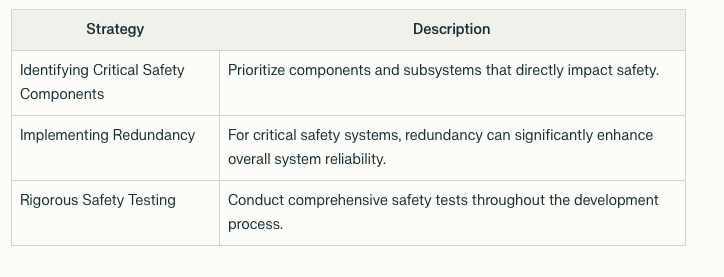
When allocating reliability in complex electromechanical systems, safety must always be the primary consideration. This approach not only protects users and the environment but also safeguards the reputation and longevity of the product and company. Safety-centric reliability allocation involves:

1. Identifying Critical Safety Components: Prioritize components and subsystems that directly impact safety.

2. Implementing Redundancy: For critical safety systems, redundancy can significantly enhance overall system reliability.

3. Rigorous Safety Testing: Conduct comprehensive safety tests throughout the development process.
Cost Considerations in Reliability Allocation.

While safety is paramount, cost considerations play a crucial role in reliability allocation. Balancing reliability improvements with associated costs involves:

1. Life Cycle Cost Analysis: Consider not just initial production costs, but also long-term maintenance and potential failure costs.

2. Cost-Benefit Analysis of Reliability Improvements: Evaluate the return on investment for various reliability enhancement strategies.

3. Optimizing Component Selection: Choose components that offer the best balance of reliability and cost.

Maintenance Strategy and Reliability.

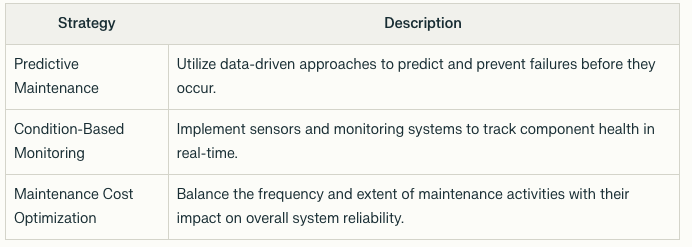
An effective maintenance strategy is integral to sustaining system reliability over time. Key aspects include:

1. Predictive Maintenance: Utilize data-driven approaches to predict and prevent failures before they occur.

2. Condition-Based Monitoring: Implement sensors and monitoring systems to track component health in real-time.

3. Maintenance Cost Optimization: Balance the frequency and extent of maintenance activities with their impact on overall system reliability.
Severity Impact and Occurrence: The FMEA Approach

Failure Mode and Effects Analysis (FMEA) is a powerful tool in reliability allocation. It helps in:

1. Assessing Failure Severity: Evaluate the potential impact of different failure modes on system performance and safety.

2. Estimating Occurrence Probability: Analyze historical data and engineering judgments to predict failure frequencies.

3. Prioritizing Mitigation Efforts: Focus resources on addressing the most critical failure modes first.

Early Detection of Degradation

Implementing strategies for early detection of system degradation is crucial for maintaining reliability. This involves:

1. Advanced Sensing Technologies: Employ state-of-the-art sensors to detect early signs of wear or malfunction.

2. Data Analytics and AI: Utilize machine learning algorithms to identify patterns indicative of impending failures.

3. Regular System Health Checks: Implement scheduled diagnostics to catch potential issues before they escalate.

Optimizing Reliability Allocation

To achieve an optimal balance in reliability allocation, consider:

1. System-Level Approach: View the system holistically, understanding how individual component reliabilities contribute to overall system performance.

2. Iterative Design Process: Continuously refine reliability allocations based on testing results and operational feedback.

3. Stakeholder Collaboration: Engage with all stakeholders, including design, manufacturing, and maintenance teams, to ensure a comprehensive approach to reliability.

Conclusion

Effective reliability allocation in complex electromechanical systems requires a multifaceted approach that prioritizes safety while carefully considering costs, maintenance strategies, and performance impacts. By employing tools like FMEA, implementing robust early detection systems, and adopting a holistic view of system reliability, engineers can create systems that are not only safe and reliable but also economically viable and high-performing

As we continue to push the boundaries of technological advancement, the importance of sophisticated reliability allocation strategies will only grow. It is our responsibility as engineers to stay at the forefront of these methodologies, ensuring that the systems we design meet the ever-increasing demands for safety, reliability, and efficiency in our complex, interconnected world.


Filed Under: Articles, on Product Reliability, Reliability Knowledge

About Semion Gengrinovich

In my current role, leveraging statistical reliability engineering and data-driven approaches to drive product improvements and meet stringent healthcare industry standards. Im passionate about sharing knowledge through webinars, podcasts and development resources to advance reliability best practices.

« 5 Clues Using MTBF is Not Helping

Leave a Reply Cancel reply

Your email address will not be published. Required fields are marked *

Reliability Knowlege series logo Photo of Semion GengrinovichArticles & Videos by Semion Gengrinovich
in the Reliability Knowledge article & video series

Recent Posts

  • Reliability Allocation
  • 5 Clues Using MTBF is Not Helping
  • The Ghost Company
  • Equipment Reliability 101
  • The Best Definition of Reliability Centered Maintenance I Ever Heard

Join Accendo

Receive information and updates about articles and many other resources offered by Accendo Reliability by becoming a member.

It’s free and only takes a minute.

Join Today

© 2025 FMS Reliability · Privacy Policy · Terms of Service · Cookies Policy

Book the Course with John
  Ask a question or send along a comment. Please login to view and use the contact form.
This site uses cookies to give you a better experience, analyze site traffic, and gain insight to products or offers that may interest you. By continuing, you consent to the use of cookies. Learn how we use cookies, how they work, and how to set your browser preferences by reading our Cookies Policy.