
Accendo Reliability

Your Reliability Engineering Professional Development Site

  • Home
  • About
    • Contributors
    • About Us
    • Colophon
    • Survey
  • Reliability.fm
    • Speaking Of Reliability
    • Rooted in Reliability: The Plant Performance Podcast
    • Quality during Design
    • CMMSradio
    • Way of the Quality Warrior
    • Critical Talks
    • Asset Performance
    • Dare to Know
    • Maintenance Disrupted
    • Metal Conversations
    • The Leadership Connection
    • Practical Reliability Podcast
    • Reliability Hero
    • Reliability Matters
    • Reliability it Matters
    • Maintenance Mavericks Podcast
    • Women in Maintenance
    • Accendo Reliability Webinar Series
  • Articles
    • CRE Preparation Notes
    • NoMTBF
    • on Leadership & Career
      • Advanced Engineering Culture
      • ASQR&R
      • Engineering Leadership
      • Managing in the 2000s
      • Product Development and Process Improvement
    • on Maintenance Reliability
      • Aasan Asset Management
      • AI & Predictive Maintenance
      • Asset Management in the Mining Industry
      • CMMS and Maintenance Management
      • CMMS and Reliability
      • Conscious Asset
      • EAM & CMMS
      • Everyday RCM
      • History of Maintenance Management
      • Life Cycle Asset Management
      • Maintenance and Reliability
      • Maintenance Management
      • Plant Maintenance
      • Process Plant Reliability Engineering
      • RCM Blitz®
      • ReliabilityXperience
      • Rob’s Reliability Project
      • The Intelligent Transformer Blog
      • The People Side of Maintenance
      • The Reliability Mindset
    • on Product Reliability
      • Accelerated Reliability
      • Achieving the Benefits of Reliability
      • Apex Ridge
      • Breaking Bad for Reliability
      • Field Reliability Data Analysis
      • Metals Engineering and Product Reliability
      • Musings on Reliability and Maintenance Topics
      • Product Validation
      • Reliability by Design
      • Reliability Competence
      • Reliability Engineering Insights
      • Reliability in Emerging Technology
      • Reliability Knowledge
    • on Risk & Safety
      • CERM® Risk Insights
      • Equipment Risk and Reliability in Downhole Applications
      • Operational Risk Process Safety
    • on Systems Thinking
      • The RCA
      • Communicating with FINESSE
    • on Tools & Techniques
      • Big Data & Analytics
      • Experimental Design for NPD
      • Innovative Thinking in Reliability and Durability
      • Inside and Beyond HALT
      • Inside FMEA
      • Institute of Quality & Reliability
      • Integral Concepts
      • Learning from Failures
      • Progress in Field Reliability?
      • R for Engineering
      • Reliability Engineering Using Python
      • Reliability Reflections
      • Statistical Methods for Failure-Time Data
      • Testing 1 2 3
      • The Hardware Product Develoment Lifecycle
      • The Manufacturing Academy
  • eBooks
  • Resources
    • Special Offers
    • Accendo Authors
    • FMEA Resources
    • Glossary
    • Feed Forward Publications
    • Openings
    • Books
    • Webinar Sources
    • Journals
    • Higher Education
    • Podcasts
  • Courses
    • Your Courses
    • 14 Ways to Acquire Reliability Engineering Knowledge
    • Live Courses
      • Introduction to Reliability Engineering & Accelerated Testings Course Landing Page
      • Advanced Accelerated Testing Course Landing Page
    • Integral Concepts Courses
      • Reliability Analysis Methods Course Landing Page
      • Applied Reliability Analysis Course Landing Page
      • Statistics, Hypothesis Testing, & Regression Modeling Course Landing Page
      • Measurement System Assessment Course Landing Page
      • SPC & Process Capability Course Landing Page
      • Design of Experiments Course Landing Page
    • The Manufacturing Academy Courses
      • An Introduction to Reliability Engineering
      • Reliability Engineering Statistics
      • An Introduction to Quality Engineering
      • Quality Engineering Statistics
      • FMEA in Practice
      • Process Capability Analysis course
      • Root Cause Analysis and the 8D Corrective Action Process course
      • Return on Investment online course
    • Industrial Metallurgist Courses
    • FMEA courses Powered by The Luminous Group
      • FMEA Introduction
      • AIAG & VDA FMEA Methodology
    • Barringer Process Reliability Introduction
      • Barringer Process Reliability Introduction Course Landing Page
    • Fault Tree Analysis (FTA)
    • Foundations of RCM online course
    • Reliability Engineering for Heavy Industry
    • How to be an Online Student
    • Quondam Courses
  • Webinars
    • Upcoming Live Events
    • Accendo Reliability Webinar Series
  • Calendar
    • Call for Papers Listing
    • Upcoming Webinars
    • Webinar Calendar
  • Login
    • Member Home
Home » AI » Hardware Product Realization in the Age of AI

by Michael Keer Leave a Comment

Hardware Product Realization in the Age of AI

Hardware Product Realization in the Age of AI

Chapter 5: Applying Agile Hardware Techniques and Changing the Normalized “Old Ways”

In the previous chapter the differences between agile Hardware and Agile Software were explored. This chapter explores the first part of a practical look at how to apply agile methodologies to your hardware development process.

First let’s examine the impact of following the “old ways” that have become normalized as part of the everyday hardware development processes:

Developing any hardware-based product requires careful planning, management, design, and testing before it can be manufactured and shipped to customers. This has resulted in the traditional “waterfall” development model, where work is done in a series of serial activities, with review and approval requirements before moving along the development path.
 (image source: D Eden)

However, because activities are done serially, the waterfall model typically requires more time to get a product to market, which in turn increases both development costs and market risk.

For hardware product development, success depends on integrating many factors such as supply chain readiness, manufacturability, test, quality, regulatory and reliability,  requiring a skilled cross-functional team and strong collaboration at every stage of the design process.

The challenge with the waterfall method is that these interactions are inherently constrained. Agility is limited as people and processes have to wait for each serial stage to complete before they can move on to the next activity.

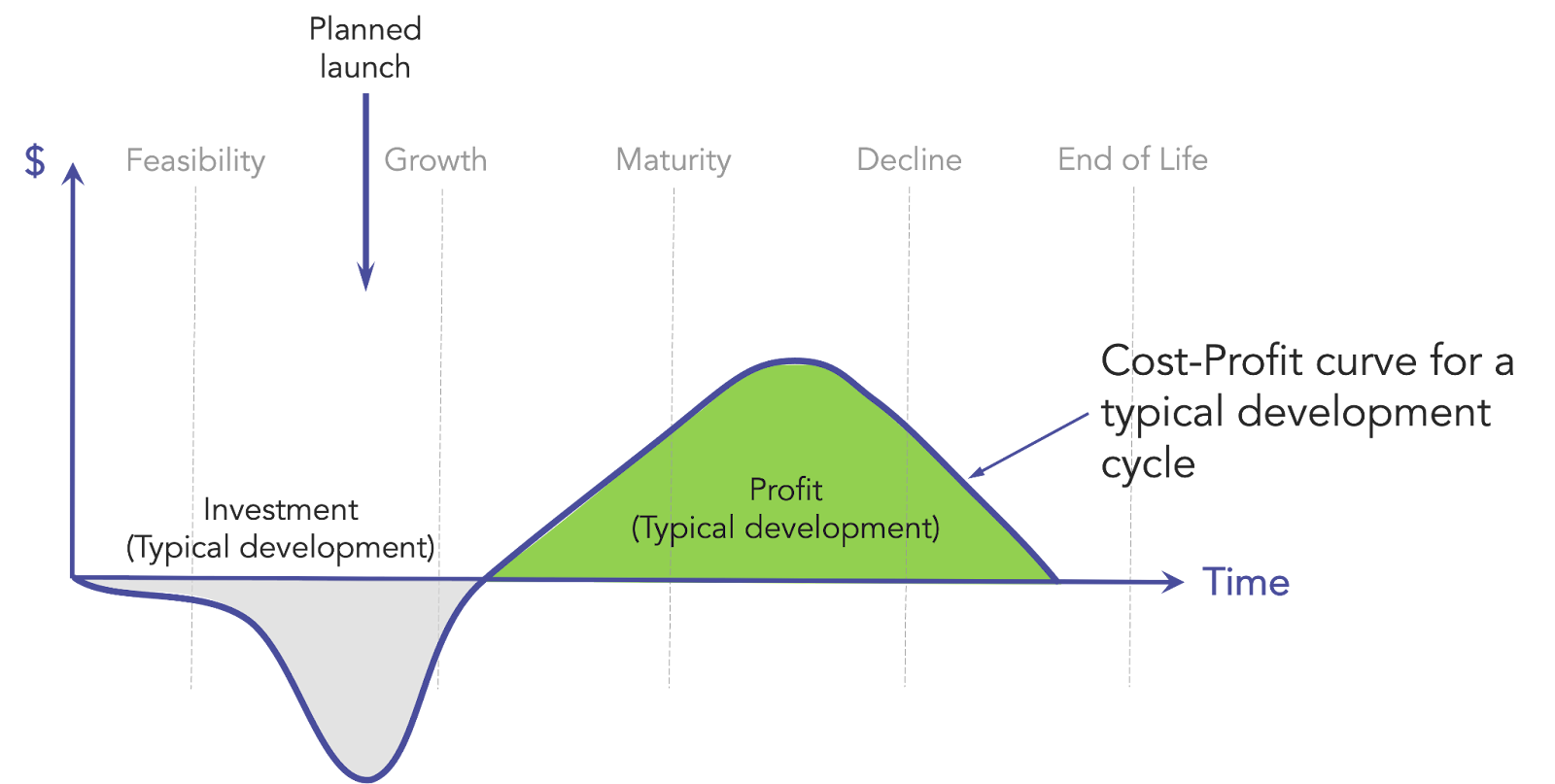
Companies that follow a traditional waterfall, or even worse, an ad hoc, unstructured development process will often experience the product–profit lifecycle curve illustrated in the diagram at the beginning of this blog.

Coordinating the right resources at the right time and aligning them with a realistic schedule is both challenging and inherently risky. Too often, the “ideal” project plan (for sales and company profits) starts with a fixed shipping date and then compresses all activities and teams into an unrealistic schedule in order to meet the target.
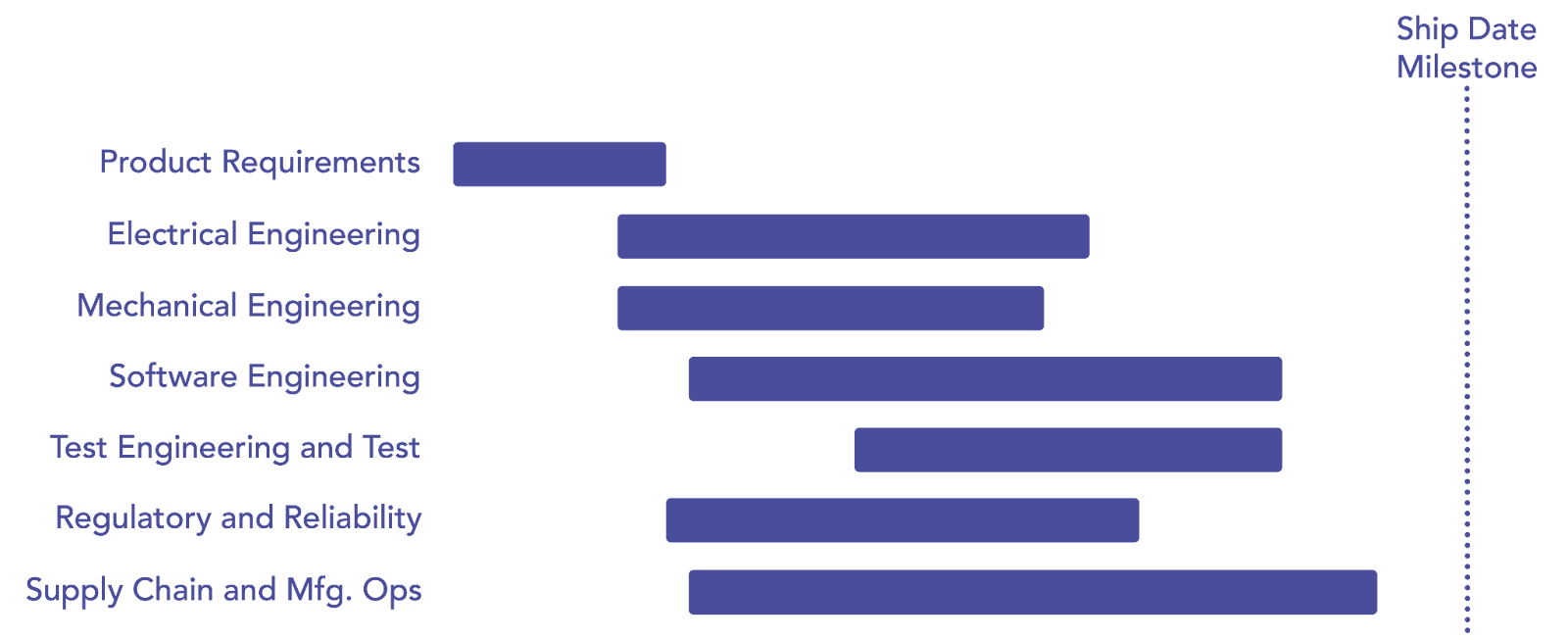
At this high level of planning, the complexities and subtle dependencies of the hardware development waterfall methodology are often ignored leading to missed schedules for hardware deliveries to software teams and vice versa.

While these dependencies remain hidden, the true challenges and risks of development are also hidden. The consequence is often late delivery and last minute design compromises, including undesirable product feature reductions as the teams struggle to meet an unrealistic plan

Join us next time for the second part of this practical look at how to apply agile methodologies to your hardware development process where we discuss how the application of agile-like principals can solve many of the issues of the waterfall methodology and increase profitability while reducing time to market. 

Sources:

Extracts from the completely revised book Agile Hardware Product Realization (version 4.0)  by Michael Keer and David Eden.


Filed Under: AI, Articles, on Product Reliability, on Tools & Techniques, The Hardware Product Develoment Lifecycle

About Michael Keer

Founder & Managing Partner, Product Realization Group
Michael Keer has over 30 years of high technology New Product Introduction experience in development and manufacturing. As founder of the Product Realization Group (PRG), Michael created a solutions based team of consultants that help companies make the leap from concept to full market scale.

« The Most Valuable Lesson My Mentor Taught Me
I Built 4 Powerful Calculators and Made Them Free for Every Reliability Engineer »

Leave a Reply Cancel reply

Your email address will not be published. Required fields are marked *

The Hardware Product Development Lifecyle series logo Photo of Michael KeerArticles Edited by Michael Keer
in the The Hardware Product Development Lifecycle article series

Recent Posts

  • What is Condition Based Maintenance Strategy?
  • Understanding Risk Profile is Important in Insurance Risk Decisions
  • I Built 4 Powerful Calculators and Made Them Free for Every Reliability Engineer
  • Hardware Product Realization in the Age of AI
  • The Most Valuable Lesson My Mentor Taught Me

Join Accendo

Receive information and updates about articles and many other resources offered by Accendo Reliability by becoming a member.

It’s free and only takes a minute.

Join Today

© 2026 FMS Reliability · Privacy Policy · Terms of Service · Cookies Policy

Book the Course with John
  Ask a question or send along a comment. Please login to view and use the contact form.
This site uses cookies to give you a better experience, analyze site traffic, and gain insight to products or offers that may interest you. By continuing, you consent to the use of cookies. Learn how we use cookies, how they work, and how to set your browser preferences by reading our Cookies Policy.