intro material
CRE Preparation Course
The course is now closed to new students. The previous cadre of students (you retain lifetime course access) are working their way though the material and preparing for their exam. The new 2018 CRE Body of Knowledge goes into effect January 2018, therefore I’m working now to improve the course, adding material, references, and more sample problems.
Watch for the next opening of the course in 2026. If you would like to be among the first to hear about course enhancements, study hints, and tips, plus details about the course and when it becomes available again, then sign up for the ‘interested’ list.
Course Information
The ASQ CRE certification exam preparation course allows you to brush up or review (and for some learn for the first time) every element of the ASQ CRE Body of Knowledge.
The course provides a mix of lectures, sample problems, and reading, to guide your mastery of the content.
The course provides support and encouragement so you stay on track and have the best possible preparation for the certification exam.
The lectures also include advice on how to best use the concepts, tools, and techniques at work. The real value of the certification is found by improving the value you provide by being a better reliability engineer.
If you have already signed up for the course, login and enjoy.
Lost Password? Click here to have it emailed to you.
Join the I’m Interested list to be alerted when the course opens again.
Your On-demand Course with Instructor Support
Immediate access to all 170 lessons discussing concepts, reviewing procedures and flushing out context and applicability.
Plus, I’m here to support you upon request.
Plus each lesson has the option to download the slides, the video, or the audio for review offline.
Each module has a scored quiz. There are 416 questions in the quizzes. Most sections have 25 questions.
Many lessons have a set of sample exam-style questions. These are Quick Quizzes and just to assist you in mastering the material, practicing parsing the questions, and learning your references.
Pilot students requested a set of glossaries one for terms and one for formulas. The terms glossaries are now available and included in the course. One is organized by topic and the other is alphabetical.
How Long Will the Course Take?
This will depend on how many video lectures you view and how many of the sample exam problems you attempt. The course contains approximately 32 hours of video lecture, plus over 500 sample exam questions.
It is recommended that beyond the lectures, you plan on another 40 to 80 hours for reading and practicing answering the questions.
What are the course perquisites?
An interest in reliability engineering.
For those specifically preparing to sit for the ASQ CRE exam, you should meet the certification eligibility requirements (a mix of education and work experience, including time in leadership positions)
Give yourself at least 2 month before exam day for the course material, reading, and study time
To register for the course today, click the Start Today button and gain immediate access.
Course and Exam References
For this course and for use during the exam, you are highly recommended to secure a copy of the QCI CRE Primer as your primary reference.
You may want, if you do not have them already, a few other references, including:
Practical Reliability Engineering by O’Connor and Kleyner
A good statistics book you know well. I use An Introduction to Statistical Methods and Data Analysis by Ott and Longnecker
ASQ Exam Registration
If you plan to take the CRE exam, sign up separately for the course directly with ASQ. Learn more about exam dates, certification requirements and more at the ASQ CRE Certification page.
What is your return policy?
If you are not satisfied with the content, send me an email within 30 days for a full refund.
To register for the course today, click the Start Today button and gain immediate access.
Thank you for the CRE course, it was really helpful to brush up my skills in ASQ CRE BOK under your guidance. — Douzi
I. A. 1. Benefits of Reliability Engineering

I. Reliability Management
A. Strategic management
1. Benefits of Reliability Engineering (Understand)
Describe how reliability engineering techniques and methods improve programs, processes, products, systems, and services.
Our work as reliability engineers has significant impact on organization, product and customer success. Understanding the value we provide allows us to focus on the areas that contribute the most value.
Additional References
Benefits of Reliability Engineering (article)
Good mind (article)
Finding Value (ebook)
Quick Quiz
Live Event Discussions and Recordings
Reliability-Centered Maintenance by Nolan & Heap
a good statistics textbook
Use the Stats Book You Know Well
The important recommendation here is to use a textbook that you are familiar with already. If you haven’t sold your college text, or have one you use regularly at work, that will be fine.
The text should include the basics of probability and statistics, hypothesis tests, confidence intervals, control charts, sample size determination, and introductions to ANOVA and DOE, as a minimum. Check which reference you reach for when facing statistics questions while doing the practice exam questions.
I (Fred) took an extensive data analysis course in pursuit of my Master of Science degree in statistics. It’s a good all-around stats reference, so if you don’t have one, I recommend it.
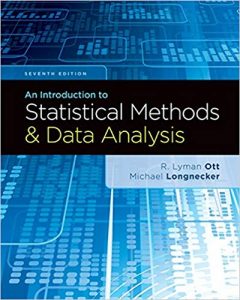
 An Introduction to Statistical Methods and Data Analysis
R. Lyman Ott and Michael Longnecker
Duxbury Press
7th Edition
ISBN 978-1305269477
11 June 2015
Pending review.
*Accendo Reliability participates in the Amazon Services LLC Associates Program. This affiliate advertising program provides a way for sites to earn a commission on links to Amazon. In short, this means when you buy something on Amazon after following a link from this site, we get a small percentage of its price. This helps support Accendo Reliability by offsetting a portion of the cost to maintain the site. And, your support is much appreciated.
Juran’s Quality Handbook
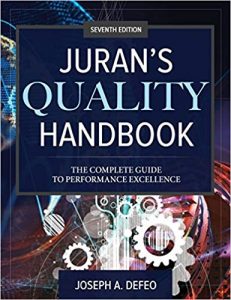
 Juran’s Quality Handbook
Joseph M. Juran and Joseph A. De Feo
McGraw-Hill Education
7th Edition
ISBN 978-1259643613
3 November 2016
Pending review.
*Accendo Reliability participates in the Amazon Services LLC Associates Program. This affiliate advertising program provides a way for sites to earn a commission on links to Amazon. In short, this means when you buy something on Amazon after following a link from this site, we get a small percentage of its price. This helps support Accendo Reliability by offsetting a portion of the cost to maintain the site. And, your support is much appreciated.
CRE Primer
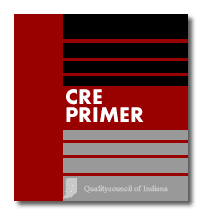
 Certified Reliability Engineering Primer
Robert Dovich and Bill Wortman
Quality Council of Indiana
5th Edition
1 January 2018
The Quality Council of Indiana produces a broad array of primers for those preparing for one of the ASQ certification exams.
The Certified Reliability Engineer Primer – published in 2018 – is a three-ring binder covering the entire body of knowledge in detail along with sample questions & answers.
It is an excellent book for those refreshing skills for the exam, or just as a everyday desk reference. With plenty of worked out problems, along with sample exam questions, this reference is highly recommended.
You will also find a solution booklet and sample exam CD.
You may be able to find a copy for sale online. Be sure to check the edition, as the current 5th edition is tailored to the current ASQ CRE body of knowledge.
You may also find someone willing to sell or loan you a copy by posting your request on the CRE Preparation Linkedin Group.
As an extra resource when preparing for the exam or looking for a short tutorial on a specific reliability topic, visit the CRE Preparation Notes series of tutorials. The series has hints and tips for test taking, preparation recommendations, and over 300 short tutorials.
Annual CRE Exam References Survey Results

This is the third annual survey to find what you recommend for those preparing for the ASQ CRE exam.
As a reliability engineer, you may have wondered which references are the most useful. Or as an accomplished CRE you may have been asked for recommendations. Either way, thanks for contributing to the:
Annual ASQ CRE Exam Recommended References Survey
2017 Survey Results and Discussion
The Typeform powered survey open in December 2016 enjoyed 30 unique visits and while not everyone completed the survey, we did get many responses. Average response time was 3 minutes and 20 seconds, which was twice as long as expected. Thanks for putting some thought into your responses.
You can view the results as produced by Typeform and the collected details here. Below is a summary and some comments.
Unnecessary to Essential Scoring
The first set of questions as you to rank five references as from 1. Unnecessary to 5. Essential. In short which references do you plan to take with you (or recommend) for the exam.
The CRE Primer from the Quality Council of Indiana and The Certified Reliability Handbook, 2nd Ed by Benbow & Broome with an 4.10 and 4.07 average score, respectively top the list of recommended references.
A good statistics textbook and the Practical Reliability Engineering by O’Connor and Kleyner with average scores of 3.93 and 3.72, respectively, are our collective third and fourth recommendations.
Practical Relaibility Engineering dropped from the top recommendation in 2015 to fourth.
Juran’s Quality Handbook with an average score of 3.00 was not seen as essential.
Score Reference
4.10 CRE Primer
4.07 The Certified Reliability Engineer Handbook
3.93 a good statistics textbook
3.72 Practical Reliability Engineering
Recommendations to Drop
The next question asked which of the five references should be dropped from the list. In short, which would you not recommend?
Just under half of the respondents listed a title to drop. In order of frequency they are:
55% Juran’s Quality Handbook
17% none
17% The Certified Reliability Engineer Handbook
6% A good statistics book
6% Practical Reliability Engineering
One person listed Reliability Engineering 3nd by Elsayed (not on list, so this might be a recommendation)
If there is a clear consensus to add a reference we’ll drop Juran’s from the list. The recommendations seem to suggest if you have a copy, that is a great, if not, don’t worry about it.
Recommendations to Add
This question enjoy responses, sometimes multiple responses, by nearly two thirds of respondents. We do like our references. Here are the recommended additions to the reference list in order of frequency of mention:
16% Nothing
16% CRE Primer
11% CRE Handbook by Benbow & Broome [ed. full title is The Certified Reliability Engineer Handbook, 2nd edition – now in it’s 3rd edition ]
And one person each recommended adding the following:
Practical Engineering, Process, and Reliability Statistics by Durivage
Reliability Engineering Handbook, v 1 & 2, by Dimitri
Reliability Statistics by Dovich
Introduction to Reliability and Maintainability Engineering by Charles E. Ebeling
Reliability Engineering Handbook by Dodson
Reliability Handbook by Ebeling
Juran’s Quality Handbook
Reliability Toolkit by RAC
Practical Statistical Tools for the Reliability Engineer by RAC
One person recommended a discussion forum – which the LinkedIn Group CRE Preparation group may serve this function.
Based on the survey we will not add anything to the recommended list.

