Accendo Reliability

Your Reliability Engineering Professional Development Site

  • Home
  • About
    • Contributors
    • About Us
    • Colophon
    • Survey
  • Reliability.fm
    • Speaking Of Reliability
    • Rooted in Reliability: The Plant Performance Podcast
    • Quality during Design
    • CMMSradio
    • Way of the Quality Warrior
    • Critical Talks
    • Asset Performance
    • Dare to Know
    • Maintenance Disrupted
    • Metal Conversations
    • The Leadership Connection
    • Practical Reliability Podcast
    • Reliability Hero
    • Reliability Matters
    • Reliability it Matters
    • Maintenance Mavericks Podcast
    • Women in Maintenance
    • Accendo Reliability Webinar Series
  • Articles
    • CRE Preparation Notes
    • NoMTBF
    • on Leadership & Career
      • Advanced Engineering Culture
      • ASQR&R
      • Engineering Leadership
      • Managing in the 2000s
      • Product Development and Process Improvement
    • on Maintenance Reliability
      • Aasan Asset Management
      • AI & Predictive Maintenance
      • Asset Management in the Mining Industry
      • CMMS and Maintenance Management
      • CMMS and Reliability
      • Conscious Asset
      • EAM & CMMS
      • Everyday RCM
      • History of Maintenance Management
      • Life Cycle Asset Management
      • Maintenance and Reliability
      • Maintenance Management
      • Plant Maintenance
      • Process Plant Reliability Engineering
      • RCM Blitz®
      • ReliabilityXperience
      • Rob’s Reliability Project
      • The Intelligent Transformer Blog
      • The People Side of Maintenance
      • The Reliability Mindset
    • on Product Reliability
      • Accelerated Reliability
      • Achieving the Benefits of Reliability
      • Apex Ridge
      • Breaking Bad for Reliability
      • Field Reliability Data Analysis
      • Metals Engineering and Product Reliability
      • Musings on Reliability and Maintenance Topics
      • Product Validation
      • Reliability by Design
      • Reliability Competence
      • Reliability Engineering Insights
      • Reliability in Emerging Technology
      • Reliability Knowledge
    • on Risk & Safety
      • CERM® Risk Insights
      • Equipment Risk and Reliability in Downhole Applications
      • Operational Risk Process Safety
    • on Systems Thinking
      • The RCA
      • Communicating with FINESSE
    • on Tools & Techniques
      • Big Data & Analytics
      • Experimental Design for NPD
      • Innovative Thinking in Reliability and Durability
      • Inside and Beyond HALT
      • Inside FMEA
      • Institute of Quality & Reliability
      • Integral Concepts
      • Learning from Failures
      • Progress in Field Reliability?
      • R for Engineering
      • Reliability Engineering Using Python
      • Reliability Reflections
      • Statistical Methods for Failure-Time Data
      • Testing 1 2 3
      • The Hardware Product Develoment Lifecycle
      • The Manufacturing Academy
  • eBooks
  • Resources
    • Special Offers
    • Accendo Authors
    • FMEA Resources
    • Glossary
    • Feed Forward Publications
    • Openings
    • Books
    • Webinar Sources
    • Journals
    • Higher Education
    • Podcasts
  • Courses
    • Your Courses
    • 14 Ways to Acquire Reliability Engineering Knowledge
    • Live Courses
      • Introduction to Reliability Engineering & Accelerated Testings Course Landing Page
      • Advanced Accelerated Testing Course Landing Page
    • Integral Concepts Courses
      • Reliability Analysis Methods Course Landing Page
      • Applied Reliability Analysis Course Landing Page
      • Statistics, Hypothesis Testing, & Regression Modeling Course Landing Page
      • Measurement System Assessment Course Landing Page
      • SPC & Process Capability Course Landing Page
      • Design of Experiments Course Landing Page
    • The Manufacturing Academy Courses
      • An Introduction to Reliability Engineering
      • Reliability Engineering Statistics
      • An Introduction to Quality Engineering
      • Quality Engineering Statistics
      • FMEA in Practice
      • Process Capability Analysis course
      • Root Cause Analysis and the 8D Corrective Action Process course
      • Return on Investment online course
    • Industrial Metallurgist Courses
    • FMEA courses Powered by The Luminous Group
      • FMEA Introduction
      • AIAG & VDA FMEA Methodology
    • Barringer Process Reliability Introduction
      • Barringer Process Reliability Introduction Course Landing Page
    • Fault Tree Analysis (FTA)
    • Foundations of RCM online course
    • Reliability Engineering for Heavy Industry
    • How to be an Online Student
    • Quondam Courses
  • Webinars
    • Upcoming Live Events
    • Accendo Reliability Webinar Series
  • Calendar
    • Call for Papers Listing
    • Upcoming Webinars
    • Webinar Calendar
  • Login
    • Member Home
Home » You searched for Change Management » Page 59

Search Results for: Change Management

by James Kovacevic

169-RCA Trends with Chris Eckert

169-RCA Trends with Chris Eckert

RCA Trends with Chris Eckert

RCA is a process where you get to the root cause of the problem and then solve it by using a systemic approach. To get started with RCA, you need to gather your data first. Once you set your data points to gather meaningful and useful data, then, you can perform RCA to prevent a failure or find a solution to fix it. There are four basic steps for a good RCA. In the first step, you should be able to gather fresh data the minute a failure occurs. In the second step, you have to determine the impact of that incident. You should know what you are looking for?

In this episode, we covered:

  • What is RCA?
  • Learn the four basic steps for a good RCA!
  • How have Millennials improved how RCA is done?
  • And much more!

ᐅ Play Episode

by Bryan Christiansen Leave a Comment

Using CMMS to Minimize Production Losses and Maintenance Costs

Using CMMS to Minimize Production Losses and Maintenance Costs

In many manufacturing plants, managing equipment breakdowns and can seem like an overwhelming task. Machine failures occur without warning, production lines go down, managers and supervisors point fingers, and maintenance personnel continually chase parts and problems. 

It’s often the case that these plants do not use a CMMS to gather data, plan preventative maintenance, or schedule repairs. This lack of planning contributes to a reactive maintenance environment where personnel is constantly trying to ‘keep up’ with production line problems.

[Read more…]

Filed Under: Articles, CMMS and Reliability, on Maintenance Reliability Tagged With: CMMS

by Greg Hutchins Leave a Comment

Project Organizations – Harmony or Cacophony

Project Organizations – Harmony or Cacophony

Guest Post by Malcolm Peart (first posted on CERM ® RISK INSIGHTS – reposted here with permission)

In a galaxy far-far-away a Jedi Knight said, “Integrated Matrix” and, with a sweeping wave of his hand, the project organisation was immediately taken from the Dark side of chaotic confusion and the Force was with them…

This could be the end to a Star Wars movie about project management (LOL).  However, and with few earthbound Jedi project management practitioners, our project organisations are rarely perfect and not what they would claim to be. [Read more…]

Filed Under: Articles, CERM® Risk Insights, on Risk & Safety

by James Kovacevic

167-Greatest Manufacturing Challenges with Calvin Williams

167-Greatest Manufacturing Challenges with Calvin Williams

Greatest Manufacturing Challenges with Calvin Williams

Every organization’s end goal is to have continuous improvement. There are tools out there that can help you with it. One of such tools is the Impruver. It helps you keep your performance up-to-date and notifies you when you miss something and gets you on your way towards what need to be done. Another tool that helps you make continuous improvement is digital action board. It places an accountability process in place where you can see the results for yourself, improve the area that needs it, and keep tracking individual and overall performance. Having those checks brings a sense of responsibility in everyone that directly impacts manufacturing of your facility.

In this episode, we covered:

  • How can you achieve continuous improvement?
  • Find out which organizational tool is right for you!
  • Why is it getting more difficult for big companies to stay current with market trends?
  • And much more!

ᐅ Play Episode

by Greg Hutchins 2 Comments

ISO 31000 in Government: A Case Study

ISO 31000 in Government: A Case Study

Guest Post by James Kline (first posted on CERM ® RISK INSIGHTS – reposted here with permission)

ISO 31000 is the International Enterprise Risk Management (ERM) framework developed in 2009 by the International Organization for Standardization (ISO).  Its use in government is increasing.  The reason for the increase is that governments around the world are recognizing that risk events are increasing in frequency and cost.  For instance, Hurricane Harvey impacted the States of Texas, Louisiana, Mississippi, Tennessee and Kentucky.  It flooded 19 water systems, 31 waste water systems and 13 super fund sites spreading toxic waste throughout the region.  It cost Texas $125 billion dollars. (1)   [Read more…]

Filed Under: Articles, CERM® Risk Insights, on Risk & Safety

by James Kovacevic Leave a Comment

164 Unsung Heros with Ryan

164 Unsung Heros with Ryan

Unsung Heros with Ryan

With the kind of data that technicians collect in the field on a daily basis, it is very hard to note down everything. What they usually do is they go into the shop, perform some routine repairs and then come back to their desks to note everything they have encountered. Even if they manage to note down every single thing into their notebook or whatever paperwork they have available to them, they have to move around a lot and hassle through data every time they leave their position to go into the shop and then, come back.

In this episode, we covered:

  • Reliability and Maintenance industry
  • How do you select the right tools?
  • Do you need a consultant?
  • And much more!

ᐅ Play Episode

by Dev Raheja Leave a Comment

Magic of Reliability

Magic of Reliability

Most senior managements don’t know that Reliability can get them high profits very quickly. And therefore high return on investment. Hyundai’s Ten Year Warranty. Their market share was going downhill for over ten years, suddenly it started to go upwards instead. All because of high reliability!

The impact of reliability extends far beyond reliability itself. It establishes the cost of warrants, repair, maintenance, logistics and the indirect costs of unavailability, downtime, and the COST OF SAFETY RECALLS which runs to hundreds of million dollars., and throughout the life of the product. This paper presents an outside-the-box view of how to get the best results by aiming at twice the life in the product specification and by preventing the high-risk failure modes resulting in an extraordinary return on investment, as much as 10,000%. [Read more…]

Filed Under: Articles, Innovative Thinking in Reliability and Durability, on Tools & Techniques

by James Kovacevic Leave a Comment

How to Deliver Sustainable Gains in Maintenance Planning

How to Deliver Sustainable Gains in Maintenance Planning

Utilizing the PDCA Methodology in Work Planning

It is well known that maintenance planning & scheduling can deliver significant improvements in the efficiency and effectiveness of the maintenance department.  Maintenance planning & scheduling seems simple enough, plan the work and schedule it to be done at the most opportune time.   However, why is it that the organization seem to struggle with realizing the benefits of maintenance planning & scheduling?  In my experience, I have seen organizations that focus on the scheduling portion of work management, while not fully planning the work.   Doc Palmer (an authority on Maintenance Planning & Scheduling) has said that you cannot schedule without proper planning.  So how is it that they are scheduling work without knowing what needs to be done and what materials are required?

[Read more…]

Filed Under: Articles, Maintenance and Reliability, on Maintenance Reliability

by Dev Raheja 6 Comments

Death of a Reliability Engineer

Death of a Reliability Engineer

(Reproduced from the article “Death of a Reliability Engineer” by Dev Raheja, Reliability Review, Vol. 30, March 2010 with permission)

When I first wrote the article in March 1990, I implied an ‘F’ grade to reliability engineers. Now almost 20 years later, I would give them a “E’. Yes, there is a little improvement but nothing you can write to your mother about.

The MTBF cancer was wide spread and is still wide spread in the DoD. The only reason I upgraded the reliability engineer from F to E is because the MTBF in some industries is no longer used such as in the automotive industry. They use the failure rates instead to hide their shame.

Failure rate is just the reciprocal of MTBF. Good job! Same old corn flakes with a new product name! [Read more…]

Filed Under: Articles, Innovative Thinking in Reliability and Durability, on Tools & Techniques

by Greg Hutchins Leave a Comment

Stepping Stones in the Lean Journey

Stepping Stones in the Lean Journey

Guest Post by Joseph Paris (first posted on CERM ® RISK INSIGHTS – reposted here with permission)

As very young children, we had an instinctive need to be very close to our parents – feeling a great deal of anxiety, even a sense of abandonment, if they were not within our sight.  As we grew older – and whether it was geographically, intellectually, or psychologically – we would become more comfortable with greater distances from what we felt were our basic truths, but almost always as stepping stones and rarely great leaps. 

Think of early commanders of sailing ships always keeping sight of land until traveling ever greater distances was more predictable because of maps and navigation techniques and tools. [Read more…]

Filed Under: Articles, CERM® Risk Insights, on Risk & Safety

by James Kovacevic Leave a Comment

158 LORA with Lucas Marino

158 LORA with Lucas Marino

Level Of Repair Analysis with Lucas Marino

Most of the organizations in the maintenance and reliability industry have limited resources and they want to make the best use of what they have got. If the maintenance requirements of an organizations don’t match its resources, it is always going to result into an increased cost and decreased employee performance. The type of maintenance that an asset required throughout its life cycle needs to be performed in a balanced way. That’s why it is so important to have a maintenance philosophy when you are planning the life cycle cost of an asset. Level of Repair Analysis or LORA is a framework that helps you manage between maintenance cost and resources.

In this episode, we covered:

  • What is LORA?
  • How to start using LORA!
  • The value of having a maintenance philosophy!
  • And much more!

ᐅ Play Episode

by James Kovacevic Leave a Comment

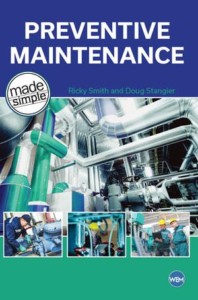
Insights into Preventive Maintenance Made Simple with Doug Stangier

I recently had the pleasure to interview Doug Stangier, co-author of Preventive Maintenance Made Simple.  This is another excellent book in the Made Simple series, published by ReliabilityWeb.  During the interview, Doug not only provides insights into his book but also into what world class Preventive Maintenance looks like.   Anyone new to maintenance and reliability, or seasoned experts can benefit from this great book.  Without further delay, here is the interview with Doug.

[Read more…]

Filed Under: Articles, Maintenance and Reliability, on Maintenance Reliability Tagged With: Preventive Maintenance (PM)

by Leave a Comment

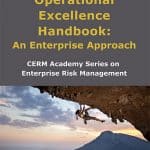
Operational Excellence Handbook: An Enterprise Approach

Operational Excellence Handbook: An Enterprise Approach

What is Operational Excellence Handbook: An Enterprise Approach?

Operational Excellence Handbook is the planning, execution, and reporting of business management that encourages process improvement, lean, and quality. This handbook provides a practical and hands on approach based on the control of variability (risk), process improvement, and scientific management.

What This Book Can Do for You?

The Operational Excellence Handbook offers the following benefits to you, specifically explaining:

  • Explains the importance of global competitiveness.
  • Describes how Op Ex leadership is the critical requirement for all operational success.
  • Offers Op Ex solutions on how to cope with change and disruption – the new normal.
  • Describes how empowerment is a prerequisite for continuous improvement.
  • Describes how teaming rules have changed.
  • Offers suggestions on how customer requirements can be satisfied in a changing environment.
  • Describes how communications can facilitate project execution and ensure outcomes.
  • Helps ensure continuous improvement projects are planned, initiated, and completed on time, on budget, and within scope.
  • Offers outsourcing tips and tools.

by Greg Hutchins Leave a Comment

Project Ain’t Broke: Don’t Fix It: But Are You Maintaining It?

Project Ain’t Broke: Don’t Fix It: But Are You Maintaining It?

Guest Post by Malcolm Peart (first posted on CERM ® RISK INSIGHTS – reposted here with permission)

Projects go wrong and in our binary world projects either succeed or fail.  There is a plethora of articles, opinions and reasons for such success and failure but why, and how, is this possible when we have more and more ‘qualified’ project managers?

When a project is still moving or hasn’t fallen apart it may be categorised as “it ain’t broke” and optimistic project managers may conclude “no need to fix it“.  However, we all know that preventive maintenance will allow for successful operation and minimise breakdowns and avoid trouble, “a stitch in time saves nine“. [Read more…]

Filed Under: Articles, CERM® Risk Insights, on Risk & Safety

by James Kovacevic Leave a Comment

154-Asset Condition Monitoring with Jack Nicholas

154-Asset Condition Monitoring with Jack Nicholas

Asset Condition Monitoring with Jack Nicholas

Asset condition monitoring can be defined the process to determine the health status of the equipment using high-tech tools, predict future status based on the deficiencies found, and return health to normal before complete loss of function. That way you can plan the maintenance of the equipment at your own best time rather than having the equipment fail at a bad time. There are a lot of tools out there that can help you with predictive maintenance or asset condition monitoring. Using sensors is one of the best examples of advanced tools being used to achieve maintenance and reliability goals for the equipment.

In this episode, we covered:

  • Why the basics are the first steps!
  • What tools you should be using for each step!
  • Measures to take to sustain improvement!
  • And much more!

ᐅ Play Episode

  • « Previous Page
  • 1
  • …
  • 57
  • 58
  • 59
  • 60
  • 61
  • …
  • 77
  • Next Page »
Get Weekly Email Updates
The Accendo Reliablity logo of a sun face in circuit

Please login to have full access.


Lost Password? Click here to have it emailed to you.

Not already a member? It's free and takes only a moment to create an account with your email only.

Join

Your membership brings you all these free resources:

  • Live, monthly reliability webinars & recordings
  • eBooks: Finding Value and Reliability Maturity
  • How To articles & insights
  • Podcasts & additional information within podcast show notes
  • Podcast suggestion box to send us a question or topic for a future episode
  • Course (some with a fee)
  • Largest reliability events calendar
  • Course on a range of topics - coming soon
  • Master reliability classes - coming soon
  • Basic tutorial articles - coming soon
  • With more in the works just for members

© 2025 FMS Reliability · Privacy Policy · Terms of Service · Cookies Policy

Book the Course with John
  Ask a question or send along a comment. Please login to view and use the contact form.
This site uses cookies to give you a better experience, analyze site traffic, and gain insight to products or offers that may interest you. By continuing, you consent to the use of cookies. Learn how we use cookies, how they work, and how to set your browser preferences by reading our Cookies Policy.