
Accendo Reliability

Your Reliability Engineering Professional Development Site

  • Home
  • About
    • Contributors
    • About Us
    • Colophon
    • Survey
  • Reliability.fm
    • Speaking Of Reliability
    • Rooted in Reliability: The Plant Performance Podcast
    • Quality during Design
    • Reliability 4.0
    • CMMSradio
    • Way of the Quality Warrior
    • Critical Talks
    • Asset Performance
    • Dare to Know
    • Maintenance Disrupted
    • Metal Conversations
    • The Leadership Connection
    • Practical Reliability Podcast
    • Reliability Gang
    • Reliability Hero
    • Reliability Matters
    • Reliability it Matters
    • Maintenance Mavericks Podcast
    • Women in Maintenance
    • Accendo Reliability Webinar Series
  • Articles
    • CRE Preparation Notes
      • Reliability Bites
    • NoMTBF
    • on Leadership & Career
      • Advanced Engineering Culture
      • ASQR&R
      • Engineering Leadership
      • Managing in the 2000s
      • Product Development and Process Improvement
    • on Maintenance Reliability
      • Aasan Asset Management
      • AI & Predictive Maintenance
      • Asset Management in the Mining Industry
      • CMMS and Maintenance Management
      • CMMS and Reliability
      • Conscious Asset
      • EAM & CMMS
      • Everyday RCM
      • History of Maintenance Management
      • Life Cycle Asset Management
      • Maintenance and Reliability
      • Maintenance Management
      • Plant Maintenance
      • Process Plant Reliability Engineering
      • RCM Blitz®
      • ReliabilityXperience
      • Rob’s Reliability Project
      • The Intelligent Transformer Blog
      • The People Side of Maintenance
      • The Reliability Crime Lab
      • The Reliability Mindset
    • on Product Reliability
      • Accelerated Reliability
      • Achieving the Benefits of Reliability
      • Apex Ridge
      • Beyond the Numbers
      • Breaking Bad for Reliability
      • Field Reliability Data Analysis
      • Metals Engineering and Product Reliability
      • Musings on Reliability and Maintenance Topics
      • Product Validation
      • Reliability by Design
      • Reliability Competence
      • Reliability Engineering Insights
      • Reliability in Emerging Technology
      • Reliability Knowledge
    • on Risk & Safety
      • CERM® Risk Insights
      • Equipment Risk and Reliability in Downhole Applications
      • Operational Risk Process Safety
    • on Systems Thinking
      • The RCA
      • Communicating with FINESSE
    • on Tools & Techniques
      • Big Data & Analytics
      • Experimental Design for NPD
      • Innovative Thinking in Reliability and Durability
      • Inside and Beyond HALT
      • Inside FMEA
      • Institute of Quality & Reliability
      • Integral Concepts
      • Learning from Failures
      • Progress in Field Reliability?
      • R for Engineering
      • Reliability Engineering Using Python
      • Reliability Reflections
      • Statistical Methods for Failure-Time Data
      • Testing 1 2 3
      • The Hardware Product Develoment Lifecycle
      • The Manufacturing Academy
  • eBooks
  • Resources
    • Special Offers
    • Accendo Authors
    • FMEA Resources
    • Glossary
    • Feed Forward Publications
    • Openings
    • Books
    • Webinar Sources
    • Journals
    • Higher Education
    • Podcasts
  • Courses
    • Your Courses
    • 14 Ways to Acquire Reliability Engineering Knowledge
    • Live Courses
      • Introduction to Reliability Engineering & Accelerated Testings Course Landing Page
      • Advanced Accelerated Testing Course Landing Page
    • Integral Concepts Courses
      • Reliability Analysis Methods Course Landing Page
      • Applied Reliability Analysis Landing Page
      • Statistics, Hypothesis Testing, & Regression Modeling Course Landing Page
      • Measurement System Assessment Course Landing Page
      • SPC & Process Capability Course Landing Page
      • Design of Experiments Course Landing Page
    • The Manufacturing Academy Courses
      • An Introduction to Reliability Engineering
      • Reliability Engineering Statistics
      • An Introduction to Quality Engineering
      • Quality Engineering Statistics
      • FMEA in Practice
      • Process Capability Analysis course
      • Root Cause Analysis and the 8D Corrective Action Process course
      • Return on Investment online course
    • Industrial Metallurgist Courses
    • FMEA courses Powered by The Luminous Group
      • FMEA Introduction
      • AIAG & VDA FMEA Methodology
    • Barringer Process Reliability Introduction
      • Barringer Process Reliability Introduction Course Landing Page
    • Fault Tree Analysis (FTA)
    • Foundations of RCM online course
    • Reliability Engineering for Heavy Industry
    • How to be an Online Student
    • Quondam Courses
  • Webinars
    • Upcoming Live Events
    • Accendo Reliability Webinar Series
  • Calendar
    • Call for Papers Listing
    • Upcoming Webinars
    • Webinar Calendar
  • Login
    • Member Home
Home » Articles » on Product Reliability » Reliability Knowledge » Perfect Recall

by Semion Gengrinovich Leave a Comment

Perfect Recall

Perfect Recall

Voluntary Safety Recall of Whirlpool Microwaves.

In 2001, Whirlpool Corporation, the world’s leading manufacturer and marketer of major home appliances, voluntarily recalled about 1,800,000 Whirlpool, KitchenAid, and Kenmore brand “over the range” microwave-hood combinations.

Working in cooperation with the U.S. Consumer Product Safety Commission (CPSC), Whirlpool recalled the units because they had received seven complaints of fire and did not want to risk customer injury or property damage. The CPSC helps protect the general public from unreasonable risks of serious injury or death from consumer products under the agency’s jurisdiction. More often than not, manufacturers of such products work with the CPSC to voluntarily recall products from the market that may pose a risk to individuals.

Seven cases were reported to the CPSC where a fire resulted in the microwave unit. In those cases, the microwave was in operation at the time it caught fire. Fault tree analysis led to the identification of a “hotspot” (location of high-intensity microwave energy) situated at the top of the unit above a mica plate separating the cooking chamber from the distributor fan and wave guide duct.
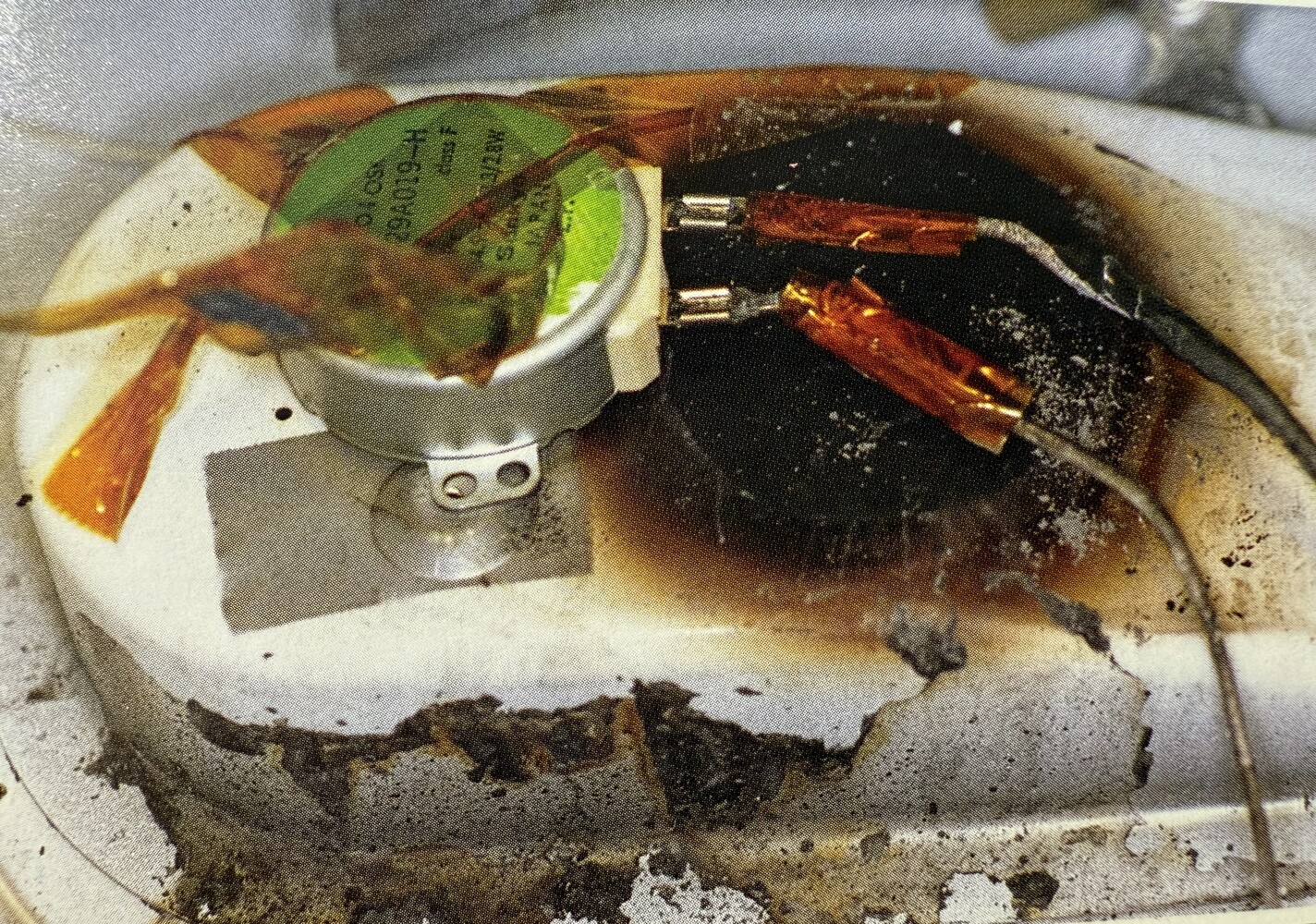
Corroded and dirty industrial equipment with green label. Burn marks near electical connectors

Because the mica cover at the top of the unit was porous, it was susceptible to the seepage of splashed food oils through its surface. Once across the porous cover, oils condensed at the base of the wave guide where the hotspot caused ignition. The upper steel surface of the wave guide duct was then heated to temperatures high enough to ignite adjacent plastic ducting that served the vent hood. It was ignition of the hood’s plastic ducting that caused the observed cases of fire.
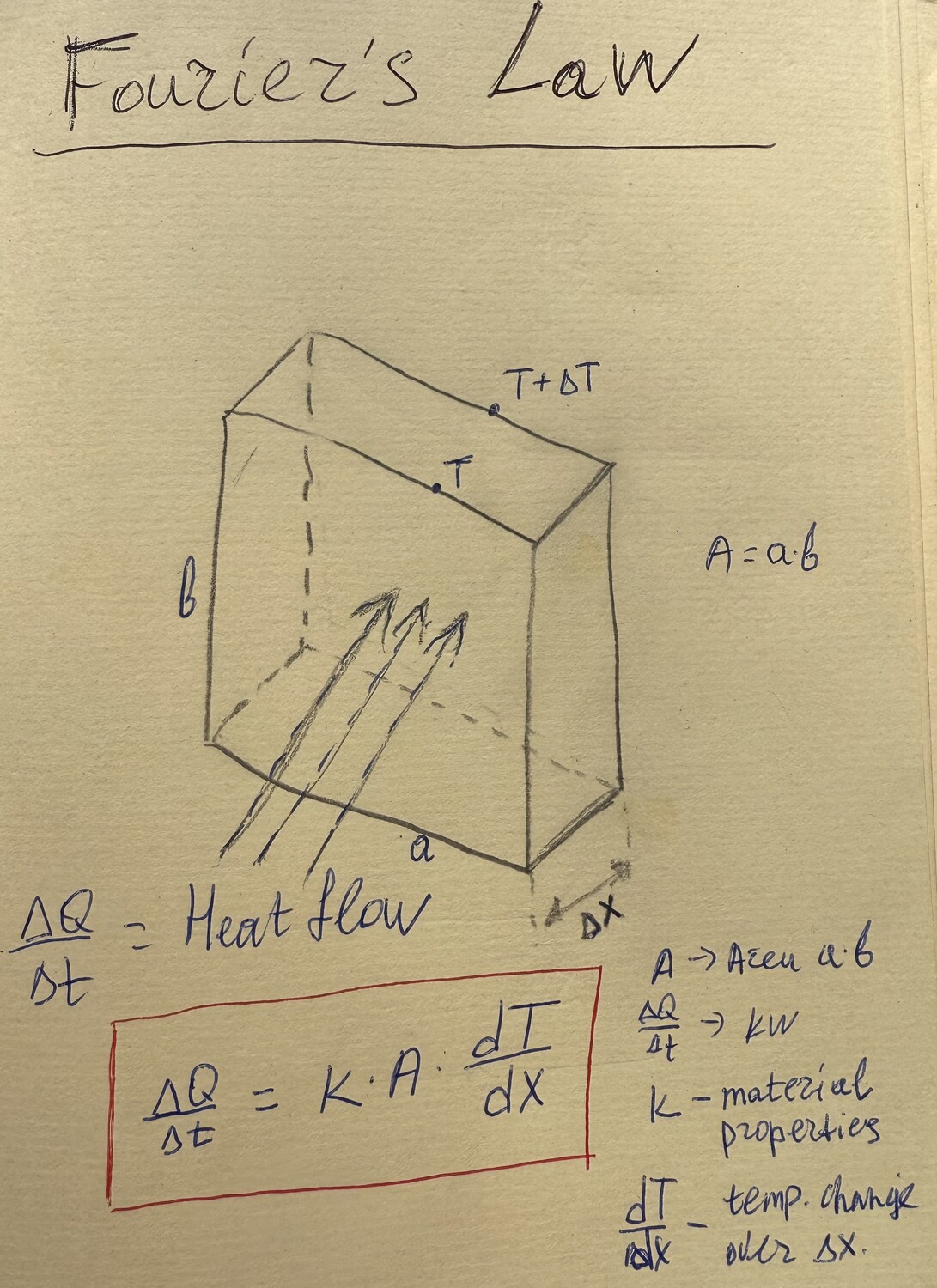
Diagram illustrating Fourier's Law of heat conduction with a cube and equations describing heat flow and thermal conductivity.

To correct the design, Whirlpool replaced the mica plate with a non-porous material, sealed the air duct from food vapors, and added a high-limit thermostat at the top of the unit to monitor temperature and ensure safety.

Filed Under: Articles, on Product Reliability, Reliability Knowledge

About Semion Gengrinovich

In my current role, leveraging statistical reliability engineering and data-driven approaches to drive product improvements and meet stringent healthcare industry standards. Im passionate about sharing knowledge through webinars, podcasts and development resources to advance reliability best practices.

« Organizational Toxicity: Offensive? Or Defensive?
Design of Experiments using JASP software »

Leave a Reply Cancel reply

Your email address will not be published. Required fields are marked *

Reliability Knowlege series logo Photo of Semion GengrinovichArticles & Videos by Semion Gengrinovich
in the Reliability Knowledge article & video series

Recent Posts

  • Performance Loss: Beyond “Running Too Slow”
  • Design of Experiments using JASP software
  • Perfect Recall
  • How to Avoid Delivering Bad Data
  • Organizational Toxicity: Offensive? Or Defensive?

Join Accendo

Receive information and updates about articles and many other resources offered by Accendo Reliability by becoming a member.

It’s free and only takes a minute.

Join Today

© 2026 FMS Reliability · Privacy Policy · Terms of Service · Cookies Policy

Book the Course with John
  Ask a question or send along a comment. Please login to view and use the contact form.
This site uses cookies to give you a better experience, analyze site traffic, and gain insight to products or offers that may interest you. By continuing, you consent to the use of cookies. Learn how we use cookies, how they work, and how to set your browser preferences by reading our Cookies Policy.
