
Is Profit from Failure a Good Idea?
Abstract
Kirk and Fred discussing the article that Fred recently posted and the strategy of making a spare parts and service a source of the majority of programs profit.
ᐅ Play Episode
Your Reliability Engineering Professional Development Site
Kirk and Fred discussing the article that Fred recently posted and the strategy of making a spare parts and service a source of the majority of programs profit.
ᐅ Play Episode

The new CRE body of knowledge goes into effect for exams starting January 2018.
The changes include topics that has been dropped, added, or altered. There also is a new structure with 5 main groups rather than the previous seven. Overall, the BoK remained pretty much the same with a reorganization of the topics.
Reading the new BoK and comparing it to the old BoK raises a few concerns or observations. Let’s take a look at the new structure and what the changes say about the reliability engineering profession. [Read more…]

I just noticed the new 2018 ASQ CRE Body of Knowledge had been posted on the ASQ site. The new BoK will be in effect for CRE exams as of January 2018. Thus, we have six months to adjust to the new body of knowledge.
This is part 1 of a multipart review of the new BoK. Here we’ll look at the parts that those preparing for the exam will not have to master or review. There are 10+ topics dropped completely or in part from the BoK.
In future articles, we’ll review what has been added, what has been changed (a review), and how to best prepare for exams based on the new BoK. Plus, we can look over past BoK’s to understand where reliability engineering practice is today.
In part, the logic is these sets of tools (topics) that are not widely used by working reliability engineers. In some cases, I agree, and in others, I don’t. Let’s look at the eight topics not found in the upcoming CRE BoK. [Read more…]
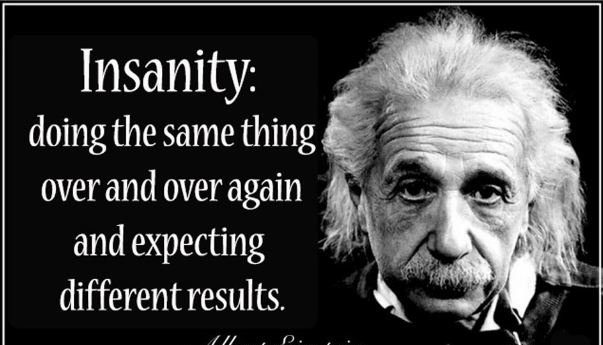 I want my customers to be successful, every one of them. Yet there are times I can see the writing on the wall and I know as hard as I might try to show them a clear path to what it takes to be successful they have their own plan. Some of them are so complex that people become confused just trying to make sense of them, and others get so hung up in the minutiae of even the simplest of steps like listing a 3 part failure mode they will word-smith themselves to a point where folks just give up. I find myself asking “why do people have to make what is really so simple into something that appears to be complex?” [Read more…]

Reliability engineers are equipped with an arsenal of techniques (FTA, RBD, Markov, FMEA / FMECA, SIL) for reliability, availability, safety and maintainability analysis. However, it is not always clear when to use each technique.
In order to design a safe and reliable product, reliability engineering techniques should be integrated with the system design process. This fact is well known, and today many system engineering conferences include discussions regarding reliability and safety [1,2]. [Read more…]
Reliability goals are often communicated in Mean Time Between Failure (MTBF) 40,000 hrs, Failure rate 0.00035, or percentage still functioning over time 99.98%. If you are not familiar with actually calculating these numbers they really don’t mean a lot. Are any of those above numbers good? bad? something we will even measure before release?
Are any of those above numbers good? bad? something we will even measure before release? [Read more…]
Recently Peter Stuttard asked if I knew of a reference for the perfect strength and perfect stress concepts. I didn’t and asked for a bit of explanation of the phrases.
Here is his reply (via Linkedin, btw a great tool to get and stay in touch) posted with permission with minor formatting edits.
To learn more about Peter check out his Linkedin profile.
Fred
Thanks for responding so quickly, the concepts of Perfect Strength and Perfect Stress are related to your discussion re Parts Count and Parts Stress predictions and reading this on your web site prompted me to ask you about them. [Read more…]

Fred and Phil sat down to talk about MTBF, RAMS, and the work he does in the reliability world.
ᐅ Play Episode

The goal of a reliability initiative is to save money, not to “install” a system.
If that is not your current goal, then how did it get changed? Change sometimes happens slowly, so slowly that we don’t notice it.
I’m reminded of a fable about a camel and a Bedouin. It is cold outside and the [Read more…]

When it comes to information, entertainment, finding your way around and communications these days, we more or less literally have it all at our fingertips and available to us just about anywhere.
We can even order and pay for coffee to pick up on our way from the commuter train to the office – no lineups for delays. We can book hotels, airlines and rental cars at the touch of our fingers with apps that show us the cheapest options.
We live in a world where instant gratification is a reality in many aspects of our private lives.
Consumer electronics has transformed a great deal of business – basically, anything where there is a service or goods that a consumer might buy on their own, we can get it easily and immediately.
We’ve grown used to instant gratification in much [Read more…]

Reliability initiatives are implemented to improve a company’s bottom line, period.
Root cause analysis is one of the fastest ways I know to achieve this improvement. My boss used to say “show me the money” because he realized that upper management was driven by ROI (Return on Investment) or ROC (Return on Capital).
You can argue all you want on whether that is good or bad, but it is the way things are. [Read more…]
 Ask a question or send along a comment.
Please login to view and use the contact form.
Ask a question or send along a comment.
Please login to view and use the contact form.
We all probably know Fred’s fight against the use of “MTBF” as a default measure of reliability.
And I concur. “MTBF” offers the least insight to product reliability. It offers little to the user in terms of realizing the benefits of reliability.
However, we all would like to see products that deliver more appealing benefits; and reliability is a key factor. But reliability is only part of the equation.
Technical performance is important.
So is price. So is appearance. So is delivery. So is the customer: different customers may see the world differently. And so may your competitors.
So, we can’t all adopt the same measurement for reliability. [Read more…]
Ask a question or send along a comment.
Please login to view and use the contact form.
Occasionally, I like to step back and reflect on reliability in basic terms.
In that spirit, the basic premise of reliability is usually stated as “The probability that an item will perform a required function, without failure, under stated conditions, for a stated period of time.”
To use the reliability equation, the definition of failure must be defined, so you can tell if your equipment has indeed failed. This way you can include it in the MTBF (Mean Time Between Failure) calculation.
After you have defined a failure and recorded them appropriately, you can plug the numbers into the reliability equation, R = e ^-(λ*t) where λ is the failure rate which is defined as λ= 1/MTBF and come up with an objective value for the reliability. [Read more…]
Ask a question or send along a comment.
Please login to view and use the contact form.
Reliability goals or objectives are just a starting point.
You goals represent your target at one point in time.
At best they represent what your customers expect for reliability performance at one point in time.
When goals are set well, they anticipate what your customer expects when they receive your product. In a perfect world, you customer will find the reliability performance just a bit better than expected.
It’s not a perfect world. [Read more…]

Reliability testing is expensive, time-consuming, and fraught with errors. Is it worth the effort? Is it necessary? Let’s explore relegating testing to only a ‘when necessary’ status. Let’s explore what you and your team can do instead.
[Read more…]