
Guest Post by Geary Sikich (first posted on CERM ® RISK INSIGHTS – reposted here with permission)
The Nine Circles of Planning Hell (Adapted from Dante’s Inferno)
Introduction
Inferno, the first part of Dante’s Divine Comedy that inspired the latest Dan Brown’s bestseller of the same title describes the poet’s vision of Hell. The story begins with the narrator (who is the poet himself) being lost in a dark wood where he is attacked by three beasts which he cannot escape. He is rescued by the Roman poet Virgil who is sent by Beatrice (Dante’s ideal woman). Together, they begin the journey into the underworld or the Nine Circles of Hell.
As business continuity planners you may have experienced or are experiencing the journey through the Nine Circles of Planning Hell. When you were assigned the responsibility for developing the business continuity plan, or disaster plan, or emergency plan, or any of the myriad regulatory driven planning initiatives; you found yourself in the first level of Planning Hell – Limbo. Your journey probably continued to several of the nine circles of planning hell, or maybe you got lucky and were able to stay in that nice state of limbo until you moved on to your next assignment, job or career change. If you were not so lucky; you travelled through all nine circles of planning hell. Hopefully, if you did travel through all nine circles of planning hell, you, like Dante, emerged to find the light.
First Circle (Limbo)
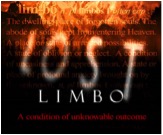
Second Circle (Lust)

Third Circle (Gluttony)

Fourth Circle (Greed)

Fifth Circle (Anger)

Sixth Circle (Heresy)

Seventh Circle (Violence)

Eight Circle (Fraud)

Ninth Circle (Treachery)

Concluding Thoughts
As I write this article in mid-October, I realize that we are not far from celebrating Halloween, where we dress in costumes and seek treats, and, perhaps, play a trick or two on those who fail to provide treats. While this article has taken a lighthearted look at the planning process, planners, vendors, suppliers, consultants, etc. I believe that there is some truth to what has been written. We often fail to see the collateral damage that can occur by misguided planning efforts, adherence to strict regulatory compliance or lack of knowledge of regulatory compliance, unquestioning acceptance of standards, “best practices” and terms that we cannot agree on from a definition perspective. We are all travelers through the “Nine Circles of Planning Hell”. How we experience the journey is important, not what we see during our travels. Recognize that we are all swayed by factors that have nothing to do with logic or reason. There is a natural tendency not to see transparent vulnerabilities due to diagnostic biases.
- If your organization is content with reacting to events it may not fare well in the “Nine Circles of Planning Hell”
- Innovative, aggressive thinking is one key to surviving in the “Nine Circles of Planning Hell”
- Recognition that theory is limited in usefulness is a key driving force in the “Nine Circles of Planning Hell”
- Strategically nimble organizations will benefit in their journey through the “Nine Circles of Planning Hell”
- Constantly question assumptions about what is “normal” during your own journey through the “Nine Circles of Planning Hell”
Copyright © Geary W. Sikich 2014. World rights reserved. Published with permission of the author
About the Author
Geary Sikich – Entrepreneur, consultant, author and business lecturer
Contact Information: E-mail: G.Sikich@att.net or gsikich@logicalmanagement.com. Telephone: 1- 219-922-7718.
Geary Sikich is a seasoned risk management professional who advises private and public sector executives to develop risk buffering strategies to protect their asset base. With a M.Ed. in Counseling and Guidance, Geary’s focus is human capital: what people think, who they are, what they need and how they communicate. With over 25 years in management consulting as a trusted advisor, crisis manager, senior executive and educator, Geary brings unprecedented value to clients worldwide.
Geary is well-versed in contingency planning, risk management, human resource development, “war gaming,” as well as competitive intelligence, issues analysis, global strategy and identification of transparent vulnerabilities. Geary began his career as an officer in the U.S. Army after completing his BS in Criminology. As a thought leader, Geary leverages his skills in client attraction and the tools of LinkedIn, social media and publishing to help executives in decision analysis, strategy development and risk buffering. A well-known author, his books and articles are readily available on Amazon, Barnes & Noble and the Internet.
REFERENCES
Apgar, David, Risk Intelligence – Learning to Manage What We Don’t Know, Harvard Business School Press, 2006.
Davis, Stanley M., Christopher Meyer, Blur: The Speed of Change in the Connected Economy, (1998).
EyeWitness to History, www.eyewitnesstohistory.com “The Suicide of Socrates, 399 BC,” (2003).
Jones, Milo and Silberzahn, Philippe, Constructing Cassandra: Reframing Intelligence Failure at the CIA, 1947–2001, Stanford Security Studies (August 21, 2013) ISBN-10: 0804785805, ISBN-13: 978-0804785808
Kami, Michael J., “Trigger Points: how to make decisions three times faster,” 1988, McGraw-Hill, ISBN 0-07-033219-3
Klein, Gary, “Sources of Power: How People Make Decisions,” 1998, MIT Press, ISBN 13 978-0-262-11227-7
Sikich, Geary W., Graceful Degradation and Agile Restoration Synopsis, Disaster Resource Guide, 2002
Sikich, Geary W., “Integrated Business Continuity: Maintaining Resilience in Times of Uncertainty,” PennWell Publishing, 2003
Sikich, Geary W., “Risk and Compliance: Are you driving the car while looking in the rearview mirror?” 2013
Sikich, Geary W., ““Transparent Vulnerabilities” How we overlook the obvious, because it is too clear that it is there” 2008
Sikich, Geary W., “Risk and the Limitations of Knowledge” 2014
Tainter, Joseph, “The Collapse of Complex Societies,” Cambridge University Press (March 30, 1990), ISBN-10: 052138673X, ISBN-13: 978-0521386739
Taleb, Nicholas Nassim, “The Black Swan: The Impact of the Highly Improbable,” 2007, Random House – ISBN 978-1-4000-6351-2, 2nd Edition 2010, Random House – ISBN 978-0-8129-7381-5
Taleb, Nicholas Nassim, Fooled by Randomness: The Hidden Role of Chance in Life and in the Markets, 2005, Updated edition (October 14, 2008) Random House – ISBN-13: 978-1400067930
Taleb, N.N., “Common Errors in Interpreting the Ideas of The Black Swan and Associated Papers;” NYU Poly Institute October 18, 2009
Taleb, Nicholas Nassim, “Antifragile: Things that gain from disorder,” 2012, Random House – ISBN 978-1-4000-6782-4



Leave a Reply