
Across every mature RCA program we’ve seen, one pattern is unmistakable: leaders who consistently close the loop win.
Not sponsors who attend kickoffs. Not managers who ask for status updates. Leaders who personally ensure that corrective actions are implemented with the same rigor used to identify root causes have RCA programs that thrive.
The contrast is stark. In immature programs, teams get very good at finding root causes but painfully inconsistent at fixing them. Actions stall in maintenance planning. Ownership gets fuzzy. Deadlines slip.
Reliability leader thinks they have an RCA problem, when in fact they have a leadership follow-through problem.
Getting to the Root Cause
Corrective actions are where RCA programs live or die. The logic tree is only the diagnosis; implementation is the treatment. High-performing sites know this and act accordingly.
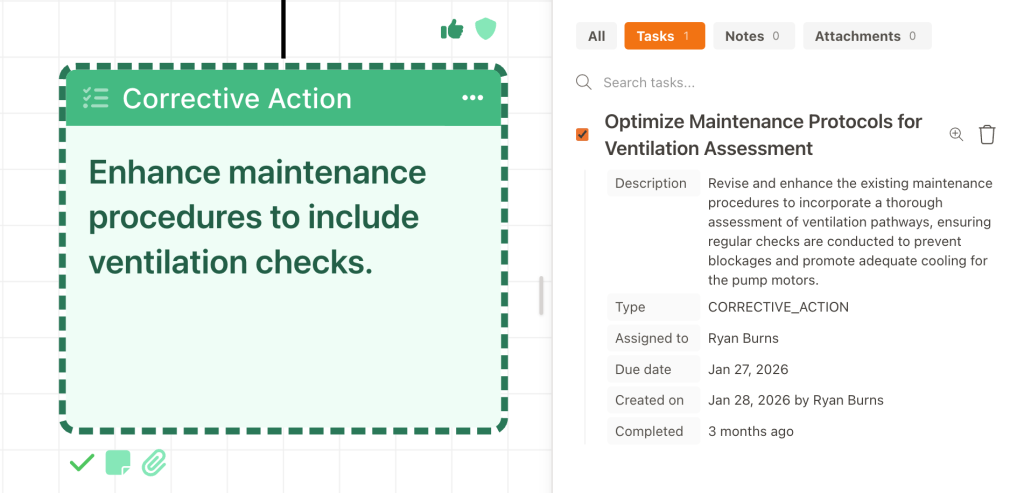
Why does follow-through fail? Three recurring reasons:
- RCA leaders assume execution happens naturally. It doesn’t—actions compete with weekly fires unless someone elevates them.
- Accountability is unclear. “Maintenance” isn’t an owner; people are. Mature programs assign actions at the individual level with unambiguous due dates.
- Leaders inspect what they didn’t think they needed to inspect. When a plant manager or regional reliability director asks one question every week—“Show me where we stand on this RCA’s actions”—momentum changes instantly.
In high-maturity programs, follow-through is embedded in the management system: a recurring review cadence, visible status, individual ownership, and consequences for slipping. These teams don’t do more RCAs, they complete more of the right ones and harvest the benefits.
And here’s the deeper truth: your team will never take corrective actions more seriously than you do. When leaders treat implementation as optional, the organization follows suit. When they treat it as non-negotiable, RCA performance accelerates.
Corrective Action (You Can Do This Week)
Run a 10-minute corrective action audit on your last five RCAs.
- Identify which actions slipped or stalled.
- Confirm the named owner for each.
- Ask each owner for their next committed step and due date.
Small leadership steps that will have a measurable impact on results.

What Do You Think?
How is corrective action follow-through showing up in your organization? What’s the biggest barrier you see? Do you agree or disagree that this is a leadership issue?
Help If You Need It
We built our RCA Software, EasyRCA, to help teams keep momentum by making corrective-action ownership visible, time-bound, and impossible to lose in the noise. Status indicators, clear action assignment, and a shared source of truth give leaders what they need most: a real-time view of who owns what and what’s slipping.



Leave a Reply