
What are the tools we use to find out the Root Cause Analysis?
[Read more…]Your Reliability Engineering Professional Development Site
When nuclear power plants were built, companies had quality assurance programs and US Nuclear Regulatory Commission risk standards. Now the nuclear industry faces obsolescence. Qualifying replacement parts and replacing analog instrumentation and controls with digital systems generates some reliability testing work. NASA solicits unmanned nuclear power plants on the moon and Mars. Nevertheless, the demand for nuclear engineers is decreasing. Fortunately, the nuclear industry spawned risk analyses useful in other industries.
[Read more…]
This phrase ‘a little bit bold & outrageous’ was constantly used by my father, Charles J. Latino early in his Reliability career. Charles founded and led one of the first corporate, global Reliability Engineering R&D groups in the U.S. for a company called Allied Chemical at the time (known as Honeywell today). This was in 1972!
[Read more…]
With over twenty years in the Manufacturing Reliability Consulting business, I have been approached at least a dozen times to align or partner with other companies who sell services and or equipment that don’t compete with the services I provide. While our community consists of thousands of individual companies around the globe, if you’ve worked in our world for more than five years and attended two to three of the major conferences each year, you’ll notice many of the same faces but often wearing a different shirt.
[Read more…]

Air Mover And Air Amplifier problems! Touted as great maintenance savers and a very efficient means of moving large volumes of air, they can in fact be extremely energy hungry. Based on using a small amount of compressed air to draw through a large amount of entrained air they can cause huge energy waste if an air compressor is run in order for the air mover to operate. It is wasteful to install an air mover on a plant air system unless the air compressor is always running well under peak demand.
[Read more…]
Asset Information is far more than just data, and it must be managed. We want to be informed, not distracted by our data. Our goal is to make “evidence-based decisions”. The “evidence” of what is going on can be very useful if it is accurate, timely, complete, and fit for its intended purpose. Increasingly, we are turning to our computers for that evidence. But do we find it? Or do we end up searching through data looking for that “needle in the haystack”? Do we spend our time making informed decisions, or seeking information from an increasingly large and confusing array of disorganized, out-of-date, inaccurate, and incomplete data? Data must be fit for purpose.
[Read more…]
Micromanagement is rarely praised but is sometimes very necessary. When new operations commence and procedures are being developed, or there is a high degree of complexity, it is essential to get things right and ‘micromanagement’ comes into its own. Training new people can require micromanagement until they get up to speed, understand an organisation’s processes and procedures, and develop any necessary experience. Also, if there is a need for greater control over an operation requiring accurate performance metrics then micromanagement will be the order of the day.
[Read more…]
The Street Railway Journal, later renamed the Electric Railway Journal was published from 1884 until 1931. The first 1884 volume described the reason for the journal’s existence, to serve the streetcar industry better than journals focusing on heavy rail. In 1884 it was most common for horses to pull street cars on fixed rails. The importance of animal power was reflected in the articles about managing animals and many advertisements for grooming machines, traces, harnesses, and cures for horse colic. A rarer method of motive power was a steam engine that drove an underground tow cable. The second 1884 volume reported several experiments in using electric motors to power the cable instead of steam.
[Read more…]
The term “reliability improvement journey” is well-established in the chemical process industry. The decade-long, tortuous journey of one company is shown in terms of operational availability (i.e., production) and relative maintenance cost at Figure 1.
[Read more…]
Failure Simulation has confirmed all root causes in the Storm Packer failure analysis. The focus is now on mitigations that prevent them from occurring again.
Mitigations are controls that prevent failures or reduce their probability of occurring. Ideally, an OEM implements mitigations to the product through Design for Reliability (DfR) activities before commercialization. Some mitigations may be best practices in product design. Others may be best practices for installation or maintenance processes. Some have been acquired through FRACAS programs. However, all will be based on institutional knowledge.
[Read more…]
We often hear our organizations referring to their workforce as their greatest ‘asset’. But are they really?
Let’s first define ‘asset’ from a financial perspective:
“In financial accounting, an asset is an economic resource. Anything tangible or intangible that can be owned or controlled to produce value and that is held by a company to produce positive economic value is an asset. Simply stated, assets represent value of ownership that can be converted into cash (although cash itself is also considered an asset)”
[Read more…]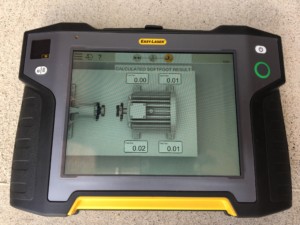 Imagine (or maybe you don’t have to) that you take out your brand new Easy-Laser system, and proceed to perform a shaft alignment. However, it seems that no matter what you do, you can’t get a great alignment. What is going on? The foundation looks good, new shims were used, the asset is clean, and there is no pipe strain. After some discussion with others, they mention a term in which you are unfamiliar with, soft foot.
[Read more…]

Proactive maintenance requires fewer people and is more suited to physical distancing, yet cost-savings measures are driving more reactive work and workplace crowding than necessary. Proactive maintenance is more “Covid”. You have laid-off workers, contractors, and reduced spending on maintenance and parts. In fact, Covid-19 presented you with a great savings opportunity! Have you done anything to make sure those costs stay down though? Short term maintenance cost savings are easy to achieve. but they bite hard later! [Read more…]

