Influence Without the Title, with Jenny Wanger (A Chat with Cross-Functional Experts)
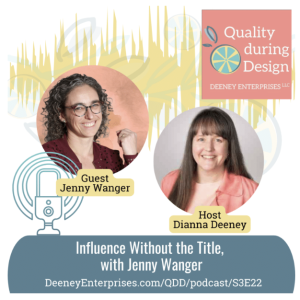
Dianna interviews Jenny Wanger about why product teams stay misaligned and how to influence upstream decisions even without formal authority. Jenny identifies a structural problem: efficiency-focused handoff workflows that strip away customer context, lock leaders into circular strategy conversations, and leave cross-functional teams scrambling to fix decisions they didn’t help make.
This interview is part of our series, “A Chat with Cross Functional Experts”. Our focus is speaking with people that are typically part of a cross-functional team within engineering projects.
About Jenny
Product organizations hire Jenny Wanger when they’re in the middle of a major transition and the way the team operates hasn’t caught up. The trigger is usually an AI transformation, a reorg, a merger, or a leadership change. She comes in, talks to twenty-plus people across the company in the first few weeks, and figures out what’s actually going on: where collaboration has broken down, where work is disappearing into the gaps, and why everybody isn’t pulling in the same direction. Then she works with the people doing the work to redesign how the team operates — and stays to make sure it lands.
Her clients describe the result as something you can feel. The product org starts humming. There’s alignment, clear direction, and genuine collaboration where there wasn’t before. The change sticks because Jenny doesn’t force new processes on teams — she changes how people think about the problems they’re solving, so the new way of working becomes theirs.
That ability to lead change from the back — building consensus instead of forcing compliance — comes from years of coaching senior product leaders through the same kinds of transitions. She’s a practitioner who also coaches, not the other way around. The coaching sharpens the consulting: years of helping individual leaders rethink their patterns have given her a rare fluency in how people actually change.
Her past work includes leading the consumer product team at SpotHero, running developer experience at Arity (an Allstate-founded startup), and co-founding the TCN Coalition, a pandemic-era tech consortium focused on digital contact tracing that she merged into the Linux Foundation. She holds degrees from Harvard College and MIT Sloan.
What Jenny and Dianna Talk About
We introduce our topics with common painpoints and causes.
Key Symptoms of Misalignment
When teams stay misaligned, you see fire drills and constant pivots. Multiple initiatives get stuck at 80% with nothing actually shipped. The environment becomes politicized, characterized by low trust. Cross-functional teams end up feeling like they’re cleaning up messes created by decisions made without them.
The Root Problem: The Factory Mindset
Speed-focused organizations treat product development like an assembly line. Design hands off to engineering, product hands off to manufacturing. Everyone stays “hands on keyboard” for efficiency. The consequence: lost customer insight, wrong assumptions, and products that don’t land with customers.
Downstream Costs
The costs compound. Teams build the wrong thing. Valued team members feel excluded and leave, driving higher turnover. Sales and customer success are left selling a poor fit. And then there’s compounding rework with the constant cycle of fixing what should have been right the first time.
Key takeaways
Strategy clarity cascades through every decision
When a team doesn’t know what problem they’re solving or why it matters to the business, they optimize for the wrong things. Jenny watched a company with five half-finished features stuck at 80%. They had no clarity on whether they were chasing speed, revenue, or customer success. Once leadership articulated the real goal (accountants should trust their data so they can focus on strategy), the team ranked those features in hours. Two belonged on the roadmap. Three didn’t. Strategy isn’t a document. It’s the filter that makes everything else obvious.
Curiosity unlocks strategy gaps without triggering defensiveness
Telling a leader “you don’t have a strategy” is a fast way to get ignored or worse. Instead, Jenny asks: “Can I interview you about your strategy and write it down?” Leaders love talking about their ideas, and the act of articulation exposes what’s actually missing. When gaps appear, Jenny highlights them as questions in the document (“Is this the piece we’re missing?”) and gets the leader to fill them in. You end up with clarity and you’ve made the leader feel heard, not criticized.
Pre-mortems bring the people who’ll live with the consequences into the room before it’s too late
Jenny’s team at SpotHero launched a feature without telling customer service. A bug hit, and CS didn’t even know who to call. That taught her to formalize the practice: before building, gather design, engineering, product, marketing, sales, operations. Ask: “Imagine we shipped this and it failed. What went wrong?” Then rank issues by likelihood × impact, not politics. Engineering surfaces database risks. Marketing flags messaging gaps. Customer service knows exactly which words confuse people. Each discipline brings what only they can see. The people who implement your decisions get a voice before you lock them in.
Public recognition builds the culture and the access
When someone brings you into a meeting early, tell their boss. When a decision gets made collaboratively, recognize the people who made it possible. Jenny sends messages like: “This person ran an awesome meeting and included all the right perspectives.” That person’s boss sees it, wonders why their other reports aren’t doing the same, and starts asking. Suddenly you have a reputation as someone worth inviting. And the culture shifts.
Your Challenge This Week
Pick one: Share a kudos with someone’s manager. Approach a colleague about a past bottleneck you could help prevent next time. Or volunteer to facilitate a pre-mortem on an upcoming project.
Contact Jenny
Jenny Wanger: jennywanger.com | LinkedIn
Newsletter signup on her website
Other podcast episodes you might like:
Information Development in Design, with Scott Abel – Part 1 (A Chat with Cross-Functional Experts)



Leave a Reply