Accendo Reliability

Your Reliability Engineering Professional Development Site

  • Home
  • About
    • Contributors
    • About Us
    • Colophon
    • Survey
  • Reliability.fm
    • Speaking Of Reliability
    • Rooted in Reliability: The Plant Performance Podcast
    • Quality during Design
    • CMMSradio
    • Way of the Quality Warrior
    • Critical Talks
    • Asset Performance
    • Dare to Know
    • Maintenance Disrupted
    • Metal Conversations
    • The Leadership Connection
    • Practical Reliability Podcast
    • Reliability Hero
    • Reliability Matters
    • Reliability it Matters
    • Maintenance Mavericks Podcast
    • Women in Maintenance
    • Accendo Reliability Webinar Series
  • Articles
    • CRE Preparation Notes
    • NoMTBF
    • on Leadership & Career
      • Advanced Engineering Culture
      • ASQR&R
      • Engineering Leadership
      • Managing in the 2000s
      • Product Development and Process Improvement
    • on Maintenance Reliability
      • Aasan Asset Management
      • AI & Predictive Maintenance
      • Asset Management in the Mining Industry
      • CMMS and Maintenance Management
      • CMMS and Reliability
      • Conscious Asset
      • EAM & CMMS
      • Everyday RCM
      • History of Maintenance Management
      • Life Cycle Asset Management
      • Maintenance and Reliability
      • Maintenance Management
      • Plant Maintenance
      • Process Plant Reliability Engineering
      • RCM Blitz®
      • ReliabilityXperience
      • Rob’s Reliability Project
      • The Intelligent Transformer Blog
      • The People Side of Maintenance
      • The Reliability Mindset
    • on Product Reliability
      • Accelerated Reliability
      • Achieving the Benefits of Reliability
      • Apex Ridge
      • Breaking Bad for Reliability
      • Field Reliability Data Analysis
      • Metals Engineering and Product Reliability
      • Musings on Reliability and Maintenance Topics
      • Product Validation
      • Reliability by Design
      • Reliability Competence
      • Reliability Engineering Insights
      • Reliability in Emerging Technology
      • Reliability Knowledge
    • on Risk & Safety
      • CERM® Risk Insights
      • Equipment Risk and Reliability in Downhole Applications
      • Operational Risk Process Safety
    • on Systems Thinking
      • The RCA
      • Communicating with FINESSE
    • on Tools & Techniques
      • Big Data & Analytics
      • Experimental Design for NPD
      • Innovative Thinking in Reliability and Durability
      • Inside and Beyond HALT
      • Inside FMEA
      • Institute of Quality & Reliability
      • Integral Concepts
      • Learning from Failures
      • Progress in Field Reliability?
      • R for Engineering
      • Reliability Engineering Using Python
      • Reliability Reflections
      • Statistical Methods for Failure-Time Data
      • Testing 1 2 3
      • The Hardware Product Develoment Lifecycle
      • The Manufacturing Academy
  • eBooks
  • Resources
    • Special Offers
    • Accendo Authors
    • FMEA Resources
    • Glossary
    • Feed Forward Publications
    • Openings
    • Books
    • Webinar Sources
    • Journals
    • Higher Education
    • Podcasts
  • Courses
    • Your Courses
    • 14 Ways to Acquire Reliability Engineering Knowledge
    • Live Courses
      • Introduction to Reliability Engineering & Accelerated Testings Course Landing Page
      • Advanced Accelerated Testing Course Landing Page
    • Integral Concepts Courses
      • Reliability Analysis Methods Course Landing Page
      • Applied Reliability Analysis Course Landing Page
      • Statistics, Hypothesis Testing, & Regression Modeling Course Landing Page
      • Measurement System Assessment Course Landing Page
      • SPC & Process Capability Course Landing Page
      • Design of Experiments Course Landing Page
    • The Manufacturing Academy Courses
      • An Introduction to Reliability Engineering
      • Reliability Engineering Statistics
      • An Introduction to Quality Engineering
      • Quality Engineering Statistics
      • FMEA in Practice
      • Process Capability Analysis course
      • Root Cause Analysis and the 8D Corrective Action Process course
      • Return on Investment online course
    • Industrial Metallurgist Courses
    • FMEA courses Powered by The Luminous Group
      • FMEA Introduction
      • AIAG & VDA FMEA Methodology
    • Barringer Process Reliability Introduction
      • Barringer Process Reliability Introduction Course Landing Page
    • Fault Tree Analysis (FTA)
    • Foundations of RCM online course
    • Reliability Engineering for Heavy Industry
    • How to be an Online Student
    • Quondam Courses
  • Webinars
    • Upcoming Live Events
    • Accendo Reliability Webinar Series
  • Calendar
    • Call for Papers Listing
    • Upcoming Webinars
    • Webinar Calendar
  • Login
    • Member Home
Home » You searched for Change Management » Page 20

Search Results for: Change Management

by Greg Christensen Leave a Comment

CR081: Being an UpKeep Ambassador Securing Leadership Buy In and Beyond with Sanya Mathura

CR081: Being an UpKeep Ambassador Securing Leadership Buy In and Beyond with Sanya Mathura

Being an UpKeep Ambassador Securing Leadership Buy In and Beyond with Sanya Mathura

In this episode, we explore key strategies for implementing a Computerized Maintenance Management System (CMMS), with a focus on gaining leadership support and maximizing efficiency. Sanya Mathura, a returning CMMSradio guest and bona-fide expert, provides actionable advice on documenting operational issues, quantifying costs, and linking CMMS benefits to business objectives.  The importance of financial justification and preparation for organizational change and, as an UpKeep Ambassador, Sanya discusses how leveraging UpKeep can enhance your CMMS experience and drive better maintenance results.

  • Document Operational Issues: Track and document issues such as equipment failures and part shortages to build a compelling case for a CMMS.
  • Quantify Costs: Calculate the costs associated with inefficiencies, like the time spent searching for parts, to highlight the financial impact of not having a CMMS.
  • Present Financial Savings: Show potential savings from using a CMMS by comparing current costs with the projected improvements in efficiency and productivity.
  • Link to Business Goals: Align CMMS benefits with overall business objectives, such as increasing efficiency, reducing downtime, and enhancing asset management.
  • Use Industry Benchmarks: Compare your organization’s performance with industry standards to identify areas where a CMMS can offer significant improvements.
  • Seek Leadership Buy-In: Use documented data and financial analysis to make a persuasive case to leadership about the value and return on investment of a CMMS.
  • Leverage UpKeep Ambassadors: Connect with UpKeep ambassadors, like Sanya or Greg, to gain insights and support for successful implementation and utilization of your CMMS.
  • Prepare for Change: Anticipate and address potential resistance to change by demonstrating how a CMMS aligns with organizational goals and enhances overall reliability and efficiency.


[Read more…]

by Michael Keer Leave a Comment

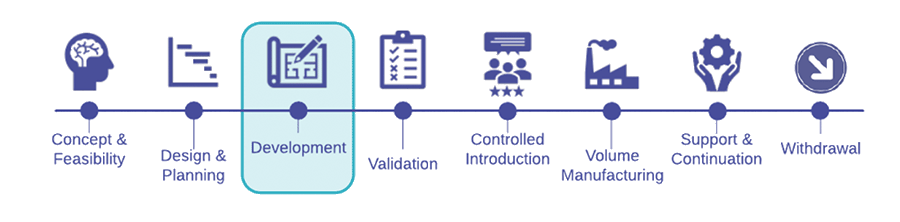
13: Controlled Introduction. Part 4 Customer Trials

13: Controlled Introduction. Part 4 Customer Trials

By Mike Freier

In the last blog, we discussed the importance of business systems including the perils of manual processes, common business systems used for an agile hardware product lifecycle, optimizing data flows, managing product data across systems, and tips for success. 

Now, in this final blog in the controlled Introduction series, we discuss the importance of customer trials, identifying and developing trial customers, running the trials and how to leverage the learnings resulting from these trials to benefit your business.

[Read more…]

Filed Under: Articles, on Tools & Techniques, The Hardware Product Develoment Lifecycle

by James Reyes-Picknell Leave a Comment

Today’s Gremlin – I’ve got this!

Today’s Gremlin – I’ve got this!

Today’s Gremlin – “I’ve got this”, doesn’t cause trouble. In fact, he’s very motivated to keep things running smoothly. He’s good at what he does and he does keep things running. But, he’s a gremlin because he doesn’t know what he doesn’t know. Sometimes, he is closed to new ideas, thinking he has been there, done that and seen it all, but doesn’t realize that he really hasn’t. What he knows, he puts to good use. What he doesn’t know is where the limitation arises.

[Read more…]

Filed Under: Articles, Conscious Asset, on Maintenance Reliability

by Greg Hutchins Leave a Comment

Lessons Learned in Oil/Gas

Lessons Learned in Oil/Gas

Guest Post by Bill Pomfret (first posted on CERM ® RISK INSIGHTS – reposted here with permission)

My first job after college was with Imperial Chemical Industries (ICI) at which time in the 1960’s the chemical process industries far outstripped that of the rest of the manufacturing industries.

My second job was as a pioneer in the development of the North Sea, the expansion in search for oil and gas, leading in time to petroleum refining, the most hazardous of all offshore rolls at the time, was hookups, which is building the field, which was developed by a single central combined drilling and production platform.

[Read more…]

Filed Under: Articles, CERM® Risk Insights, on Risk & Safety

by Mike Sondalini Leave a Comment

Ageless Maintenance and Reliability Success Secrets 5

Ageless Maintenance and Reliability Success Secrets 5

 Maintenance and reliability problems are not new. Our forefathers and ancestors understood the value of smart maintenance and high reliability. They learnt from experience and passed their knowledge down to us through parables, stories, and sayings. The timeless advice of our forbearers on successful maintenance and reliability is as applicable to us now as it has been to every generation since the dawn of civilisation.

[Read more…]

Filed Under: Articles, Maintenance Management, on Maintenance Reliability

by Semion Gengrinovich Leave a Comment

DfR – who are you?

DfR – who are you?

Design for Reliability (DfR) is a critical aspect of the product development process, particularly for electromechanical products where the interplay between electrical and mechanical components can introduce complex failure modes. DfR is a systematic approach to ensuring that a product is reliable over its intended lifespan and under the conditions it will face during use. It involves a variety of techniques and practices aimed at identifying and mitigating potential failure points early in the design process.

[Read more…]

Filed Under: Articles, on Product Reliability, Reliability Knowledge

by Greg Hutchins Leave a Comment

Can PM Communications Kill Communication

Can PM Communications Kill Communication

Guest Post by Malcolm Peart (first posted on CERM ® RISK INSIGHTS – reposted here with permission)

Video Killed the Radio Star…went the 1979 music video byThe Buggles.  MTV used this as their first ever video in 1981, but despite the prophecy and MTV’s 40 ongoing years, radio stars aren’t dead.  Radio revolutionised popular music, vinyl discs gave us today’s disc jockeys but even though technology evolves it demonstrates that the fittest will survive and not everything will be killed.

Compact cassette started to challenge vinyl in 1963.  With the emergence of CDs in the mid ‘80’s, tapes eventually became old-hat.  CDs were ousted by flash drives and today ubiquitous access to downloads overshadow almost everything…but vinyl and tapes aren’t altogether dead and buried.  People can be branded dinosaurs but sometimes they are just nostalgic; the odd scratch can make music more of a memorable memory…as does listening to cricket or baseball or horse-racing on the radio!

But it’s not just music that’s been influenced by technology.  Meetings have also been affected and, with the advent of COVID more and more of us are being exposed to on-line meetings and, of course presentations.  But how effective are some presentations in blending audiovisual media, the spoken word and that most important ingredient, people.

[Read more…]

Filed Under: Articles, CERM® Risk Insights, on Risk & Safety

by Mike Sondalini Leave a Comment

Changing an EAM System for Operational Excellence Success

Changing an EAM System for Operational Excellence Success

Any standard EAM system can be adapted to achieve Operational Excellence with the PWW EAM methodology.

Rather than going from policy to practice, Plant Wellness Way starts with how to create a healthy environment for parts microstructure when equipment is in-service. By focusing on creating healthy operating environments for components, machines, equipment, and plants, your operation will perform at world-class levels of reliability.

The standard range of Enterprise Asset Management models available will typically use an EAM Policy to decree the purposes of the EAM system. From this statement processes and practices necessary to achieve the EAM Policy aims are chosen. People will then aim to meet the policy requirements for their team or department without taking the flow on consequences into account. As a result, businesses will unintentionally create an EAM system that instils randomness and variability into the company. In this situation is it nearly impossible to create a system that achieves operational excellence success.

[Read more…]

Filed Under: Articles, Life Cycle Asset Management, on Maintenance Reliability

by Michael Keer Leave a Comment

9: Validation

9: Validation

Article by Mike Freier

In the last blog post, we discussed how incorporating Agile principles can improve your hardware product development process. Not only will you be able to accelerate your schedule, but you can also develop higher quality products with lower costs and reduced risks. Furthermore, Agile frameworks and techniques can fit into your existing new product introduction (NPI) and stage gate process, so your high-level standard operating procedures do not have to change.  

Once you have engineering and beta units in hand, validation and verification can begin. In this stage, engineering teams should test your product against the engineering design specification to verify that your product meets the performance, reliability, regulatory, manufacturing test, and safety goals.

[Read more…]

Filed Under: Articles, on Tools & Techniques, The Hardware Product Develoment Lifecycle

by Fred Schenkelberg Leave a Comment

Reliability is Not Metrics, It’s Decision Making

Reliability is Not Metrics, It’s Decision Making

MTBF, KPIs, yield, return rate, warranty… bah!

We may use one or more of these when establishing product reliability goals. When tracking performance. When making decisions.

Goals, objectives, specifications, and requirements, are stand-ins for the customer’s experience with the product.

We’re not trying to reduce warranty expenses or shouldn’t be solely focused on just that measure. We need to focus on making decisions that allow our product deliver the expected reliability performance to the customer. [Read more…]

Filed Under: Articles, NoMTBF Tagged With: Metrics, Reliability goal setting

by Mike Sondalini Leave a Comment

Useful Key Performance Indicators for Maintenance 

Useful Key Performance Indicators for Maintenance 

A useful Maintenance Key Performance Indicator (KPI) drives reliability growth while guiding your choices for improving maintenance effectiveness and efficiency. A useful maintenance KPI lets you identify the issues causing your maintenance effects and helps you select the right strategy to either support or correct the actions producing the results. It is important that when you select a range of maintenance KPI you pick those that let you improve both equipment reliability and maintenance performance and not simply tell you that you have problems in your business.

[Read more…]

Filed Under: Articles, Maintenance Management, on Maintenance Reliability

by Larry George Leave a Comment

Estimate Reliability Functions Without Life Data

Estimate Reliability Functions Without Life Data

ASQC Reliability Review, Vol. 13, March 1993

This paper shows how to estimate field reliability functions from ships and returns. It offers to estimate field reliability functions from your data. It suggests how you can use these estimates to improve service and inventory management. [Links to Google Sheet and user guide follow the paper.]

You can estimate field reliability functions without life data. You don’t need to know each part’s time to failure. In fact, if you don’t know times to failures, you have to estimate field reliability functions from ships and returns, unless you have a sample of times to failures, and some of the sample failed.

[Read more…]

Filed Under: Articles, on Tools & Techniques, Progress in Field Reliability?

by Dianna Deeney 1 Comment

SOR 1086 Enough Data?

SOR 1086 Enough Data?

Enough Data?

Abstract

Dianna and Fred discuss a common reliability engineering dilemma: do we have enough data? Is data nirvana achievable?
ᐅ Play Episode

by Michael Keer Leave a Comment

8: Development – Part 2: Manufacturing Strategy

8: Development – Part 2: Manufacturing Strategy

Article by Mike Freier

Manufacturing is an essential step in a new product launch that requires a thoughtful strategy.  In this stage, teams define a manufacturing strategy, create a development schedule, and built units to test.

[Read more…]

Filed Under: Articles, on Tools & Techniques, The Hardware Product Develoment Lifecycle

by Fred Schenkelberg 2 Comments

The Variety of Statistical Tools

The Variety of Statistical Tools

The Variety of Statistical Tools to Support Your Decision Making

My wife and I moved to a new home last year. We have yet to organize our tools.

The bedroom and kitchen are now organized. We, for the most part, can find the sweater or pan that we’re seeking.

No so for our tools in the shop. We have an assortment of hand tools for painting, home maintenance, yard work, and woodworking. In our previous home, we had the tools on pegboards, on shelves, in cabinets. We could find the right tool for the job at hand quickly. We’ve avoided the tool aisle at the hardware store recently, as we were sure we had the tool we need in the jumbled mess in our garage already. Still haven’t found it, though.

Have you noticed the number of statistical tools available? It’s like visiting a well-stocked tool store. There are basic tools like trend charting and advanced tools like proportional hazard models. Let’s explore the available tools a little so you can quickly find the right tool for the question or problem you are facing today.

[Read more…]

Filed Under: Articles, NoMTBF

  • « Previous Page
  • 1
  • …
  • 18
  • 19
  • 20
  • 21
  • 22
  • …
  • 77
  • Next Page »
Get Weekly Email Updates
The Accendo Reliablity logo of a sun face in circuit

Please login to have full access.


Lost Password? Click here to have it emailed to you.

Not already a member? It's free and takes only a moment to create an account with your email only.

Join

Your membership brings you all these free resources:

  • Live, monthly reliability webinars & recordings
  • eBooks: Finding Value and Reliability Maturity
  • How To articles & insights
  • Podcasts & additional information within podcast show notes
  • Podcast suggestion box to send us a question or topic for a future episode
  • Course (some with a fee)
  • Largest reliability events calendar
  • Course on a range of topics - coming soon
  • Master reliability classes - coming soon
  • Basic tutorial articles - coming soon
  • With more in the works just for members

© 2025 FMS Reliability · Privacy Policy · Terms of Service · Cookies Policy

Book the Course with John
  Ask a question or send along a comment. Please login to view and use the contact form.
This site uses cookies to give you a better experience, analyze site traffic, and gain insight to products or offers that may interest you. By continuing, you consent to the use of cookies. Learn how we use cookies, how they work, and how to set your browser preferences by reading our Cookies Policy.