
If a manufacturing plant was a human brain: Maintenance would be the repairing blood flow, Operations would be the electricity sparking between synapses, and Reliability would be the conscience. [Read more…]
Your Reliability Engineering Professional Development Site
A listing in reverse chronological order of articles by:
If a manufacturing plant was a human brain: Maintenance would be the repairing blood flow, Operations would be the electricity sparking between synapses, and Reliability would be the conscience. [Read more…]

It wasn’t until I was negotiating a salary for an external job offer that I really came to understand my worth in the job market. I started my career with a chemical engineering salary of $60k in 2007. I felt like I had won the lottery to score this salary right out of college.
Over the next eight years, I received annual (merit) raises based on performance, career development raises that coincided with promotions, as well as a few “equity” raises. This put me just over the six-figure mark, leaving me feeling like a ROCK STAR!! [Read more…]
In recent articles I framed the structure of a market analysis to ensure we understand customer needs and value, product requirements are “the what” the design provides (to ensure customer needs are met); the design is “the how” the product requirements will be met.
Product requirements are determined by answering the following question: “What shall the (product) design provide (output) @ input conditions? (Input conditions are functional inputs provided by the user, or environmental conditions.)
A complex product may have several outputs that interface with a system, however, and/or several inputs may be needed in order to enable the product to perform it’s intended function. System integration is therefore required.
Let’s assume your product is a subsystem. The questions become:
How do we establish optimum system performance? We would expect the customer (system designer) would model system performance and provide functional inputs, outputs and specification limits (for your subsystem) in order to achieve optimum system performance.
Accordingly, subsystem integrators should understand system performance well-enough to help system designers with overall system design optimization…at the very least, understand gaps in requirements and associated system/subsystem development risks. The subsystem requirements document therefore is a key deliverable, reviewed in detail and approved by the customer.
An integrated approach to ensuring customer needs and value should be embedded in the product life cycle process, and can save your company (and your customers) millions of dollars in product development costs.

Wouldn’t it be great if we could require the stock market to provide us 15% increases in our portfolio every year…or if we could simply require a sunny day for a picnic?
You might be familiar with the term ‘market requirements’ or a ‘market requirements document’ as a deliverable in the definition phase of a product life cycle process. To understand why market requirements don’t really exist, we must first provide the definition of a requirement. [Read more…]

A topic that often comes up lately is high turnover, especially the perception that this is common and desirable among millennials. Born in the mid eighties, I am right on the cusp between millennial and Generation X, and I am one of the aforementioned employees with a high turnover history. A specialized Reliability Engineer with nearly ten years of work experience, I have rarely stayed with a company much over two years. I never intended to be a person who moved between companies so regularly, it just kind of happened. [Read more…]
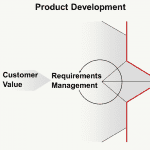
Given our primary goal of developing a profitable product, our objective in the design process is to maximize customer value and minimize cost. From a financial analysis standpoint: we pursue products with the highest possible margins (ie. charge the customer “as much” as possible, and make the product for “as little” as possible). Of course we also want to sell “as many” as possible. [Read more…]

5 Body Prep Tips to Ace the Interview
Even a seasoned professional gets a little nervous (or a lot nervous!) before an interview. It is human nature. Luckily for you, there are lots of things that you can do to prepare to boost your confidence and ready yourself. Now, I am not talking about wearing a great suit, studying your material, practicing your Ten Second Tease elevator speech, or rehearsing your Me at My Best Stories. Yes, those are all important things to do. [Read more…]

A generally accepted principle for a successful business is great people, processes & products. This can be further simplified as “maximizing customer value and minimizing cost” of the product.
Consider the following:

Do you sometimes (or often) suffer guilt or frustration due to procrastination? If so, you are not alone. It’s a common perception that procrastination is an inherent personality flaw, the result of laziness or other slothfulness. People get frustrated by procrastinators and label them as lazy, untrustworthy, and unreliable.
However, in recent decades scientists have learned a lot about how our brains work that gives insight into procrastination and why it happens. It turns out that when your advanced human brain sets out to accomplish a task, but can’t see a clear path to completion, the doubting antiquated lizard brain takes over. Your lizard brain, a leftover instinct-driven antique from the days of the caveman, decides the apparently unsolvable is overwhelming, and creates a bad attitude toward the task. It’s fight or flight, and procrastination is the flight response to the stress created by the task. [Read more…]

This time of year, people talk a lot about joy and family. But what about finding joy in the workplace? Most people in the Reliability profession spend at least 40 hours each week at work (probably much more). That’s almost 25% of our total time, and more than 35% of waking hours if you average 8 hrs of sleep per night. Who wants to spend a third of their life without joy?
If your workplace is getting you down or just plain blah, here are some ways to make a change. [Read more…]

It was 7:15 am. We had just finished up our morning kick-off meeting for our lab staff at the generating station, which was about to start-up following a planned outage. Mary, one of the senior lab technicians, came frantically into the lab from the plant.
“We have a problem! The circulating water pH meter is reading a 3.0!” Mary
My heart started racing. [Read more…]

You know the type. That person who demands the center of attention at all times and hardly pauses for a breath. The person everybody on site avoids or talks about when they aren’t around. Usually, younger people suffer the most from Knowing Everything All The Time (KEATT). Sometimes, though, it persists long after it should and people never recover.
For me, this lasted about two years after graduating. I’m not sure precisely what caused the change, but a moment came when I realized I didn’t know jack. By that time the damage had been done; many knowledgeable people didn’t like or trust me, I was frustrated and it was difficult to learn because nobody wanted to teach me. Thankfully, I did and you can recover from the disorder of Knowing Everything All The Time (KEATT).

Good day, friends and colleagues. I am excited to join Accendo Reliability to bring you a weekly column titled, “Advanced Engineering Culture.” The goal of this column is to bring awareness and solutions to common challenges technical people face in the workplace. New articles will post every Monday.
My name is Katie Switzer, and I am a Senior Reliability Engineer at a chemical manufacturing plant in West Virginia. I hold a Bachelor’s of Science in Mechanical Engineering from Clarkson University, and I have been an ISO Category III Vibration Analyst since 2009. Industries I have experience in include aerospace, nuclear power, corn milling and chemical manufacturing. [Read more…]

When you woke up this morning, how did you feel? Was it giddy excitement for what the day ahead holds? If not, then you are likely not living your purpose. Not pursuing your life’s work.
For me, the idea of pursuing my life’s work became exponentially more important in 2013. Over the past 3 years, I had gotten married (yay!), became a mother to my husband’s 5 year old son (double yay!), had a daughter (triple yay!), lost my mother to 5 year battle with lung cancer (tears! lots and lots of tears!), and become pregnant with a baby boy (due January 2017!). [Read more…]

So you’ve probably heard of elevator speeches before. You know, a speech that you could blurt out if you had 20 seconds on an elevator with someone. In theory, this should give someone an overview of what you do.
Let’s be real here, shall we? Most people don’t care about your elevator speech. When introduced via a typical elevator speech most people have already zoned out and are thinking about the best route to the snack table. Admit it – You do this too!! If you use those precious few seconds of introduction to rattle off a resume you’ve wasted an opportunity to make a memorable impression.
You know what else no one cares about?? Your job title. The majority of the time, job titles do not tell you that much information – especially if the person is working in a different industry. So sharing your title alone does not really do much to pique the interest of others. It is often the starting point, but do not get lazy and think this is the end of it.
Also, no one wants to hear a speech. People do NOT want to be talked TO. Booooooorrrrring! They want to talk WITH interesting folks. So let’s not think of it as a speech or a chance to lecture someone on what you do, ok? Ok!
Instead, shift your thinking to the goal of the elevator speech. When someone says you, “So, Tell me about yourself,” think of it as an opportunity to hook them. Make them curious. Make them ask more questions. The purpose of your elevator speech should be to entice the other person to want to get to know you. THIS, my friend, is how you make an impression. And THIS is why I like to call it a Ten Second Tease.

