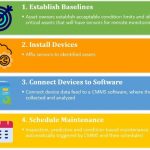
Data is the most valuable commodity in today’s world, and it is no different in reliability engineering. As one of the emerging trends in maintenance space, data plays a critical role in implementing an effective RCM strategy. It is powered by an organization’s ability to integrate multiple data sources into one seamless platform designed to disseminate actionable insights from that data to its decision-makers at the right time.
3 Ways to do Reliability Allocation #5

This is our fifth article about the 3 ways to do reliability allocation. We have been taken on a journey through the reliability design cycle, key steps for reliability allocation, allocation factors used to get these goals and key pitfalls. Now we finish off our conversation by looking at a few variations and applications. Allocating MTBF (… though we recommend against it), allocating availability, allocating maintainability (… another thing we recommend against) and allocating for different system reliability goals.
If you want to finish off your understanding of reliability allocation – read this!
3 Maintenance & Reliability Leadership Gaps

What’s Holding You Back?
Recently, I’ve been looking back over my career and trying to understand why so many companies struggle with their reliability programs. The processes, the technologies, the tools have all been around for a long time and yet we don’t succeed.
The reason we don’t succeed is poor leadership. [Read more…]
Uncle Pareto

Vilfredo Pareto is credited with the Pareto Principle, and thus the Pareto chart. He is NOT my uncle, but many assume he could be! He was an Italian economist, and I do have Italian heritage. The chart allows prioritization to happen, considering the 80/20 rule, or Pareto Principle. We cannot do everything, so where do we start? This is one way to make that choice. [Read more…]
Why Reliability Needs Risk Management to Succeed

Guest Post by John Ayers (first posted on CERM ® RISK INSIGHTS – reposted here with permission)
Most of my career was spent with the Department of Defense (DOD) industry. The many programs I worked on included a fairly difficult reliability requirement. I was taught that reliability is designed into a system. I learned that verifying a reliability requirement was done by analysis. But for the system reliability to succeed, you need to consider the manufacturing and installation of the system. This is when risk management comes into play to ensure system reliability requirements succeed. This paper explains why. [Read more…]
Standard Deviation versus Standard Error

Anyone who has worked around the fields of reliability or quality has certainly bumped into “standard deviation” – a statistic that measures the dispersion within a group of data. [Read more…]
Why This Newsletter is Late

Usually, this newsletter comes out first thing on Monday mornings. Today, it’s late. It’s late because I didn’t get it done last week. It’s late because I stayed off my laptop all weekend. [Read more…]
Concept Selection

Concept development and selection is critical for New Product Development. Approaches vary, so what should you do? The video helps you consider your situation and how to blend an approach for increased chances for project success. [Read more…]
Myth Busting 2: We Can Do It Ourselves

I am convinced that our egos often get the better of us. We suffer as a result and so too do those around us. Believing that we have the answers to all of our problems reflects just how much we fool ourselves. Maintenance managers burn out because of it.
Let’s say you are a plant general manager in a facility that is under-performing or not quite achieving the performance improvements you want. Often that can occur because of machinery and system failures that half output, sometimes for long periods before they can be repaired. Once those are corrected you breathe a sigh of relief, thank your maintenance manager for the repair achievement, and ride your production or operations manager to “catch up” on whatever output was lost. [Read more…]
3 Ways to do Reliability Allocation #4

This is our fourth article about the 3 ways to do reliability allocation. The first three articles describe the reliability design cycle and how reliability allocation is a part of this cycle. Our last article focused on what options you, as a design team leader, have at your disposal when you realize that your components aren’t on track to meet their allocated goals (or doing something!) Now we talk about working out what these allocated goals are. And how to get them. And don’t worry – it is much easier than you probably think!
If you want to learn more about a straightforward approach to reliability allocation – read this!
Creating Spaces for Vulnerability

Recently, I’ve been talking about how being vulnerable is the only way to create connection with people and open ourselves up to the lives we want. I was asked the question:“Rob, how do leaders create an environment for our teams to be vulnerable?”
At first, my answer was that leaders need to lead by example and be vulnerable first.
This is true, but we need to take it a step further.
On this podcast, Brene Brown, a leading expert in vulnerability, talks with Pete Carroll & Steve Kerr about creating spaces for vulnerability. There are 2 key points:
What is Unique about System FMEA?

Many companies miss out on the value of System FMEA and begin with lower level sub-assemblies or components. This article explains why it is usually best to begin with a properly done System FMEA.
“Big whirls have little whirls,
That feed on their velocity;
And little whirls have lesser whirls,
And so on to viscosity.”
Lewis Fry Richardson
DOE Definition

Design of Experiments (DOE) sounds far more complex than it is. The point is to create an empirical equation to make decisions. This video defines DOE in an extremely simple manner. [Read more…]
Guide to Aviation Safety

Guest Post by Steve Miller (first posted on CERM ® RISK INSIGHTS – reposted here with permission)
Most of us travel by air and have probably wondered about the safety aspects of this mode of transportation, especially in light of the almost daily news media reports of accidents, terrorist plots, problems involving aircraft crews etc. The 737 MAX debacle alone would give anyone pause! This guide gives a broad picture of how the entire aviation industry works and will hopefully shed some light on the question “how safe is it?”. [Read more…]
Myth Busting 1: Maintenance is Asset Management

This is the first in a long series of blogs about common myths I have encountered and continue to encounter in my work with various customers. None of these “myths” are universal either – some people believe them, others are not sure, others do not. Which are you? [Read more…]
Ask a question or send along a comment.
Please login to view and use the contact form.