Accendo Reliability

Your Reliability Engineering Professional Development Site

  • Home
  • About
    • Contributors
    • About Us
    • Colophon
    • Survey
  • Reliability.fm
    • Speaking Of Reliability
    • Rooted in Reliability: The Plant Performance Podcast
    • Quality during Design
    • CMMSradio
    • Way of the Quality Warrior
    • Critical Talks
    • Asset Performance
    • Dare to Know
    • Maintenance Disrupted
    • Metal Conversations
    • The Leadership Connection
    • Practical Reliability Podcast
    • Reliability Hero
    • Reliability Matters
    • Reliability it Matters
    • Maintenance Mavericks Podcast
    • Women in Maintenance
    • Accendo Reliability Webinar Series
  • Articles
    • CRE Preparation Notes
    • NoMTBF
    • on Leadership & Career
      • Advanced Engineering Culture
      • ASQR&R
      • Engineering Leadership
      • Managing in the 2000s
      • Product Development and Process Improvement
    • on Maintenance Reliability
      • Aasan Asset Management
      • AI & Predictive Maintenance
      • Asset Management in the Mining Industry
      • CMMS and Maintenance Management
      • CMMS and Reliability
      • Conscious Asset
      • EAM & CMMS
      • Everyday RCM
      • History of Maintenance Management
      • Life Cycle Asset Management
      • Maintenance and Reliability
      • Maintenance Management
      • Plant Maintenance
      • Process Plant Reliability Engineering
      • RCM Blitz®
      • ReliabilityXperience
      • Rob’s Reliability Project
      • The Intelligent Transformer Blog
      • The People Side of Maintenance
      • The Reliability Mindset
    • on Product Reliability
      • Accelerated Reliability
      • Achieving the Benefits of Reliability
      • Apex Ridge
      • Breaking Bad for Reliability
      • Field Reliability Data Analysis
      • Metals Engineering and Product Reliability
      • Musings on Reliability and Maintenance Topics
      • Product Validation
      • Reliability by Design
      • Reliability Competence
      • Reliability Engineering Insights
      • Reliability in Emerging Technology
      • Reliability Knowledge
    • on Risk & Safety
      • CERM® Risk Insights
      • Equipment Risk and Reliability in Downhole Applications
      • Operational Risk Process Safety
    • on Systems Thinking
      • The RCA
      • Communicating with FINESSE
    • on Tools & Techniques
      • Big Data & Analytics
      • Experimental Design for NPD
      • Innovative Thinking in Reliability and Durability
      • Inside and Beyond HALT
      • Inside FMEA
      • Institute of Quality & Reliability
      • Integral Concepts
      • Learning from Failures
      • Progress in Field Reliability?
      • R for Engineering
      • Reliability Engineering Using Python
      • Reliability Reflections
      • Statistical Methods for Failure-Time Data
      • Testing 1 2 3
      • The Hardware Product Develoment Lifecycle
      • The Manufacturing Academy
  • eBooks
  • Resources
    • Special Offers
    • Accendo Authors
    • FMEA Resources
    • Glossary
    • Feed Forward Publications
    • Openings
    • Books
    • Webinar Sources
    • Journals
    • Higher Education
    • Podcasts
  • Courses
    • Your Courses
    • 14 Ways to Acquire Reliability Engineering Knowledge
    • Live Courses
      • Introduction to Reliability Engineering & Accelerated Testings Course Landing Page
      • Advanced Accelerated Testing Course Landing Page
    • Integral Concepts Courses
      • Reliability Analysis Methods Course Landing Page
      • Applied Reliability Analysis Course Landing Page
      • Statistics, Hypothesis Testing, & Regression Modeling Course Landing Page
      • Measurement System Assessment Course Landing Page
      • SPC & Process Capability Course Landing Page
      • Design of Experiments Course Landing Page
    • The Manufacturing Academy Courses
      • An Introduction to Reliability Engineering
      • Reliability Engineering Statistics
      • An Introduction to Quality Engineering
      • Quality Engineering Statistics
      • FMEA in Practice
      • Process Capability Analysis course
      • Root Cause Analysis and the 8D Corrective Action Process course
      • Return on Investment online course
    • Industrial Metallurgist Courses
    • FMEA courses Powered by The Luminous Group
      • FMEA Introduction
      • AIAG & VDA FMEA Methodology
    • Barringer Process Reliability Introduction
      • Barringer Process Reliability Introduction Course Landing Page
    • Fault Tree Analysis (FTA)
    • Foundations of RCM online course
    • Reliability Engineering for Heavy Industry
    • How to be an Online Student
    • Quondam Courses
  • Webinars
    • Upcoming Live Events
    • Accendo Reliability Webinar Series
  • Calendar
    • Call for Papers Listing
    • Upcoming Webinars
    • Webinar Calendar
  • Login
    • Member Home
Home » Blog

by James Kovacevic Leave a Comment

A 2-Step Process to Improve Plant Performance

A 2-Step Process to Improve Plant Performance

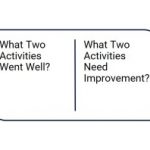
A Simple Q&A Can Reap Improved Performance in Any Activity in Maintenance.

A failure has just occurred on a critical asset in your facility.  The result was 2 hours of lost production, but it could have been worse.  The last time that the equipment failure occurred it took 5 hours to repair.  Why was the failure repaired in less than half the time than the previous occurrence?  How can we ensure that we learn from this failure and the team’s performance to improve the plant performance?

I remember reading about a simple philosophy quite a few years ago (although I can’t remember who stated it, so I apologize that I cannot provide a reference), about a simple analysis that can be applied to any maintenance activity to improve performance.  This analysis is call the 2 Up / 2 Down analysis.

The 2 Up / 2 Down analysis is quite simple and involves asking two questions.
[Read more…]

Filed Under: Articles, Maintenance and Reliability, on Maintenance Reliability Tagged With: Defect elimination, Reliability program

by Robert Allen Leave a Comment

The Project Approval Committee

The Project Approval Committee

A project approval committee can be an effective way to enable business decision-making and ensure projects are successful.

Committees may be known as a project review or steering committee; however, consider the following (proposed) objectives as follows:

  • Approve new projects (and project resources)
  • Approve project phase (phase gate) completion
  • Approve project go-forward plans (including resources)
  • Cancel projects that no longer make business sense
  • Prevent rogue/unapproved projects from consuming resources
  • Direct / redirect projects to complete key tasks or deliverables before moving forward
  • Enforce project management planning and execution

[Read more…]

Filed Under: Articles, on Leadership & Career, Product Development and Process Improvement Tagged With: Lean Project Management

by Mike Sondalini Leave a Comment

Reducing Wear in Abrasive Conditions

Reducing Wear in Abrasive Conditions

Abrasion is the removal of material from a surface by the movement of material across its surface. The factors affecting abrasive wear are the surface properties of the item being worn away, the abrasive properties of the material moving across the surface and the characteristics of motion. [Read more…]

Filed Under: Articles, on Maintenance Reliability, Plant Maintenance

by Greg Hutchins Leave a Comment

Recovery: Least Understood Element of Business Continuity Lifecycle

Recovery: Least Understood Element of Business Continuity Lifecycle

Guest Post by Geary Sikich (first posted on CERM ® RISK INSIGHTS – reposted here with permission)

The post-crisis recovery phase is one of the least addressed in planning, training and simulations.  This is an area that, if not properly managed, can cost financially, reputationally and operationally.  Communications, internal and external are, at best, misjudged.  Guidelines for recovery are lacking and most entities lose focus when it comes to discussing recovery operations.  It may be that recovery is one of the most complicated of the lifecycle elements and that no two recoveries are going to follow the same pattern. 

However, the recovery process can be segmented into manageable bits that can be undertaken using a project management approach. [Read more…]

Filed Under: Articles, CERM® Risk Insights, on Risk & Safety

by Ash Norton Leave a Comment

Cardboard and Duct Tape: Lessons in Engineering, Leadership and Life

Cardboard and Duct Tape: Lessons in Engineering, Leadership and Life

As part of the 35th Anniversary of the Governor’s Scholars Program in Kentucky, I was invited to participate in their Alumni Day at Northern Kentucky University.  So naturally, I shared with this year’s Scholars what my experience taught me about engineering leadership and life!

Below are the slides and lessons learned that I shared.  [Read more…]

Filed Under: Articles, Engineering Leadership, on Leadership & Career

by Robert Allen Leave a Comment

Statement of Work Fundamentals

Statement of Work Fundamentals

In my last article, we reviewed a proposed Product Life Cycle process, which starts with a “Define” phase.  In the “Define” phase, we are defining the project as well as the product.

We previously discussed the ‘technical leg’ of this process with the market analysis, identifying customer needs, product requirements, verification and validation, etc. [Read more…]

Filed Under: Articles, on Leadership & Career, Product Development and Process Improvement Tagged With: Requirements

by Adam Bahret Leave a Comment

Stages of Awakening

Stages of Awakening

A common progression (stages of awakening) for an organization that has a minimal application of reliability tools to one that is large market holder with the right reliable product is often like this

Stage 1) “Reliability” testing is mostly re-labeled verification and validation testing.  It measures if the design does what it is supposed to do at the end of the program.  Tests are executed with the intent of passing, not learning about the product or it’s performance under variability.  The organization experiences a large field failure surge due a single or multiple issues.  The pain of this experience in dollars, market image, and lost resource through “recovery phase” awakens them to the high ROI of incorporating reliability tools early and throughout the product development process

[Read more…]

Filed Under: Apex Ridge, Articles, on Product Reliability

by Dennis Craggs 6 Comments

Process Capability VII – Confidence Limits

Process Capability VII – Confidence Limits

Introduction

In prior articles on process capability, sample statistics and SPC statistics were assumed to be population parameters and ignored sampling variability. This article reviews the analytic methods that can be used to develop confidence bounds on the process capability indices.

$-P_p-$ Index

The Pp index calculation requires an estimate of the parameter σ. The index is calculated as:

[Read more…]

Filed Under: Articles, Big Data & Analytics, on Tools & Techniques

by Doug Plucknette Leave a Comment

The Problem With Our Top Down Reliability Effort!

The Problem With Our Top Down Reliability Effort!

I’m using this week to get my office in order. This morning I found this series of drawings I did back around 1987. While I know my old friends from Building 317 will get a kick out of this, I also know that we weren’t the first and won’t be the last team of people who worked to make our plant a better place to work.  I also know the last slide from this series is missing that showed the team alone saying “If you want to know how it happened, it pays to give credit where credit is due.” [Read more…]

Filed Under: Articles, on Maintenance Reliability, RCM Blitz

by James Kovacevic Leave a Comment

Step Change Your Plant Performance with Defect Elimination

Step Change Your Plant Performance with Defect Elimination

Why Preventative Maintenance Alone Will Not Drive a Step Change in Your Plant Performance and What You Can You Do About It

Many organizations try to improve performance by just creating PM routines and letting the technicians loose to perform the work.  This often has negative effects on plant performance.  This has been proven through studies conducted by Ledet at numerous DuPont sites.  This study looked at the impact of Planning, Scheduling and Preventative Maintenance on Plant Performance.

Ledet had found that by just implementing a PM / PdM program, organizations lost 2.40% of uptime (on a baseline of 83.50%).  Not quite the results to expect when implementing a strategy to improve plant performance.  When the PM / PdM program is implemented with Planning & Scheduling, the plant saw an increase of 5.10%.  Now that is an improvement.

But what about the remaining 11.40% of uptime?  How does one address the remaining downtime?
[Read more…]

Filed Under: Articles, Maintenance and Reliability, on Maintenance Reliability Tagged With: Defect elimination, Predictive maintenance, Preventive Maintenance (PM)

by Greg Hutchins Leave a Comment

Root Cause Analysis Framework

Root Cause Analysis Framework

Guest Post by Jignesh Padia (first posted on CERM ® RISK INSIGHTS – reposted here with permission)

Albert Einstein once said that … “Insanity is doing the same thing over and over again and expecting different results.” If you find yourself doing a root cause analysis on the same problem repeatedly, it may be time to revisit the root cause analysis from a framework point of view rather than as a tool.  In this article, I will review an example of root cause analysis as a risk management framework. This is different than examining one of the tools or processes you use for troubleshooting a problem.

There are several root cause analysis frameworks that you may come across. In my research, the top five root cause analysis frameworks related to healthcare are from the:

  • Canadian Patient Safety Institute (CPSI)
  • Institute for Healthcare Improvement (IHI)
  • National Health Service (NHS), the Joint Commission
  • World Health Organization (WHO). [Read more…]

Filed Under: Articles, CERM® Risk Insights, on Risk & Safety Tagged With: Root Cause Analysis (RCA)

by Fred Schenkelberg 2 Comments

How to Estimate the Number of Failures Next Month

How to Estimate the Number of Failures Next Month

Let’s say you have shipped 1,000 products to your customer on January 1st. All are immediately placed into service. And each month since you have received a few product returns, what we are going to call failures. We also have fitted the data to a Weibull distribution. Then in May, your boss asks you to estimate how many failures to expect in June.

This is a simple example as we’re not shipping units every month, nor changing the product design or assembly process. We also have worked out the fitted Weibull parameters already. That leaves the calculation of how many failures we should expect over the next month. [Read more…]

Filed Under: Articles, CRE Preparation Notes, Probability and Statistics for Reliability Tagged With: Statistics distributions and functions

by Adam Bahret Leave a Comment

Improving Reliability with a CM

Improving Reliability with a CM

Many product development teams use a contract manufacturer (CM) to develop and manufacture their product. It’s the “develop” term that has limitations that may be unforeseen when engaging.  Many companies use the CM to assist or even eventually entirely execute the product development.  This can have great results or be problematic.  But let’s talk about the arrangements that work well.  Troublesome CM’s are a topic for a different time.

[Read more…]

Filed Under: Apex Ridge, Articles, on Product Reliability

by Fred Schenkelberg 6 Comments

Quality & Reliability: Similarities and Differences

Quality & Reliability: Similarities and Differences

I like to say Reliability is all of quality over time. Quality professional tend to say reliability is an element of quality. David A. Garvin of the Harvard Business School suggests there are eight dimensions to quality, including reliability.

Either way one relates quality and reliability we need to remember that quality or reliability is not a department, team, the engineering down the hall. Quality and reliability is part of the culture of the organization. It is how we make decisions the impact how the product or service performs for customers. [Read more…]

Filed Under: Articles, Musings on Reliability and Maintenance Topics, on Product Reliability

by Perry Parendo Leave a Comment

Decision Making with Data

Decision Making with Data

This video provides the live audio for our Decision Making with Data presentation. The audio had issues at the beginning but gets better. [Read more…]

Filed Under: Articles, Experimental Design for NPD, on Tools & Techniques

  • « Previous Page
  • 1
  • …
  • 192
  • 193
  • 194
  • 195
  • 196
  • …
  • 273
  • Next Page »
Get Weekly Email Updates
The Accendo Reliablity logo of a sun face in circuit

Please login to have full access.


Lost Password? Click here to have it emailed to you.

Not already a member? It's free and takes only a moment to create an account with your email only.

Join

Your membership brings you all these free resources:

  • Live, monthly reliability webinars & recordings
  • eBooks: Finding Value and Reliability Maturity
  • How To articles & insights
  • Podcasts & additional information within podcast show notes
  • Podcast suggestion box to send us a question or topic for a future episode
  • Course (some with a fee)
  • Largest reliability events calendar
  • Course on a range of topics - coming soon
  • Master reliability classes - coming soon
  • Basic tutorial articles - coming soon
  • With more in the works just for members

© 2025 FMS Reliability · Privacy Policy · Terms of Service · Cookies Policy

Book the Course with John
  Ask a question or send along a comment. Please login to view and use the contact form.
This site uses cookies to give you a better experience, analyze site traffic, and gain insight to products or offers that may interest you. By continuing, you consent to the use of cookies. Learn how we use cookies, how they work, and how to set your browser preferences by reading our Cookies Policy.