Often times DOE is considered a manufacturing tool. However, it can be used upstream during R&D and Operational Qualification (OQ) activities. There is much more leverage in this situation. A case study is provided from a client organization to bring the principles to life. This video is the slides and audio recording of the presentation at MDM Minneapolis, October 28, 2013. [Read more…]
Fired Packaged Boiler Basics

Steam boilers not used for power generation and of smaller size and energy output are termed packaged boilers. The heat source is usually either electric coils or a burning fuel. When a flame is used to heat the water it is known as a fired packaged boiler. Fired boilers are considered efficient steam generators with about 85% of the available energy converted to steam. They can be of water-tube or fire-tube design. Boilers incorporate many key aspects of heat transfer to create steam from water. This article describes how fired boilers work and their key components. [Read more…]
Validating Business Continuity Plans Using Failure Point Exercise Methodology

Guest Post by Geary Sikich (first posted on CERM ® RISK INSIGHTS – reposted here with permission)
Imagine that your plan has been implemented as it was designed. You and your organization carried out the plan following every detail that was contained in the planning documents. Your plan has failed. That is all you know. Your plan failed. Now your challenge and that of your planning team is to explain why they think that the plan failed. You must determine how much contrary evidence (information) was explained away based on the theory that the plan you developed will succeed if you implement the steps required to respond to a disruption of your business operations. [Read more…]
Simplified Project Management (Part 1)

Organizations often accumulate a list of desirable projects, however, may not have project management bandwidth to filter or manage them effectively.
While project management is a respected discipline, the Project Management Institute Body of Knowledge (PMBOK) has swollen to several hundred pages. This level of detail and complexity makes it difficult to absorb and apply for ‘informal’ project managers. [Read more…]
SPC Average and Range Charts

Introduction
In my prior article, the assumptions behind SPC were discussed in detail except for the analysis. There are two types data that may be analyzed, Counts and Measurement variables. This article focuses on normally distributed measurement variables, and the construction and usage of $-\bar{X}-$ and R charts.
[Read more…]
What I Love About Reliability

Finding Skilled Workers

We are often hearing about the shortage of skilled workers. Why is this? What can you do to address it? We believe there are a few reasons for it and we can help you overcome them. This can help you achieve a cost effective competitive advantage. [Read more…]
Heat Transfer Basics
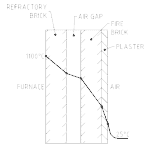
Heat is energy and its nature is to flow from a state of high excitement to one of low excitement. Heat is transferred from a hot place to a cold place by convection, conduction or radiation. This article explains the three modes of heat transfer and provides simple examples of each. Methods to reduce and increase heat transfer are also presented. [Read more…]
Communication Failure: What to do?

Guest Post by Malcolm Peart (first posted on CERM ® RISK INSIGHTS – reposted here with permission)
“Communication failure” is an often cited reason for project failure or cancellation. All too often it is only recognised after the fact even though ‘poor communication’ will almost inevitably have been included on the risk register.
Communication is the transfer (and receipt) of the right data, information and knowledge to the right party(s), at the right time, in the right place, and in the right medium. Information provides the power to make the decisions that are needed to make a project successful and resolve and overcome difficulties.
Effective and efficient communication allows the right decisions to be made and the correct action to be taken. However, the conscious or unconscious spreading of misinformation is miscommunication and has the opposite effect. [Read more…]
Why DMAIC Endures as a Robust Thought Process
From time-to-time, there are new ways of thinking or shortcuts to solving problems. However, the tried-and-true Define-Measure-Analyze-Improve-Control (DMAIC) thought process endures as a fundamentally robust problem-solving thought process.
DMAIC must be properly applied to be effective, however. In this article we’ll consider some important objectives within each DMAIC sub-process.
First, let’s consider each sub-process as an opportunity to perform collaborative problem solving. In the “Define” phase (for example) the stakeholders and team members mutually agree on the problem statement, goals & objectives, process under study, process start/stop points, team members, business impact, etc.
Thank You For Letting Apex Ridge Break Your Stuff in 2018

Happy New Year! And thank you for letting us break your stuff to improve your design in 2018. This is a story of when I was NOT invited to break things but did anyway.
The Anti Case Study

There are many benefits from acquiring our services. But what if you do not bring us in? This anti-case study describes a situation where they wanted to wait. The impacts came from discussions with company employees after the changes. Can you really afford to wait? [Read more…]
5 Common Questions on the IIoT (Industrial Internet of Things)
In continuing this year’s theme regarding common questions on relevant topics, today I have the 5 most common questions people have been asking me about the Industrial Internet of Things. Like every other article or Blog I have posted in the past I encourage you to all to jump into the conversation by asking questions or providing comments to my questions and answers. [Read more…]
US Climate Change Assessment

Guest Post by James Kline (first posted on CERM ® RISK INSIGHTS – reposted here with permission)
In November 2018, the U.S. Global Change Research Program issued Volume II of the Fourth National Climate Assessment Report. Volume I was issued in 2017. It deals with the science behind global change. Volume II deals with the impact of global warming on natural environment, agriculture, energy production, human welfare, and societal impact. This article discusses the assessments made in Volume II. [Read more…]
Making the FMEA Scope Visible

Adding Clarity to Your FMEA
Before commencing with the FMEA meetings, it is essential to visibly show the nature and scope of the analysis. This article discusses different ways FMEA scope can be made visible, and why this is a necessary step.
“The soul cannot think without a picture” – Aristotle

