
FMEA Q and A
In this question, a reader asks how to define system-level functions, and how they are different from subsystem and component functions.
“A prudent question is one-half of wisdom.”
Francis Bacon
Your Reliability Engineering Professional Development Site
A listing in reverse chronological order of articles by:
In this question, a reader asks how to define system-level functions, and how they are different from subsystem and component functions.
“A prudent question is one-half of wisdom.”
Francis Bacon
Our white paper regarding t-test calculations has been very popular. Those that use the t-test tool regularly have commented “I finally understand what it is all about.”
The natural question they ask me next is “have you done anything with the F-test?” It is another common tool and one that is equally misunderstood.
Due to popular request, here is our attempt at explaining the F-test tool, in the two possible methods of use. [Read more…]

Do you consider yourself an FMEA beginner or are you more experienced? Challenge yourself with these problems about FMEA functions, and see how you do. One of the best ways to learn is by pondering application problems and seeing of you can solve them.
If you haven’t yet read last week’s article Understanding FMEA Functions – Part 1, it would be a good idea to read it now, as the questions are based on that article.

In honor of Labor Day, I thought I would jump over to the Built-In Self-Test (BIST) wing of the DFT Castle.
I will provide you with a quick tour. Then when you hear the term in a meeting you can follow along and ask a few questions.
BIST saves labor for the Automatic Test Equipment (ATE).
Though there’s no free lunch. BIST does require an engineer to labor—someone has to design it specific to the device under test (DUT). [Read more…]
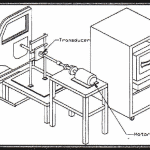
This is an example of a practical DOE that was used in the development of a manual window mechanism for a truck application. A similar process can be used for current mechanical and electrical design and development projects. In this article, you will see that the DOE method:

The basis of DOE analysis is comparing two samples. This methodology can be used just as well for changing one variable or more than one variable as in DOEs. Comparison of means is as simple as the t-test.
Some people initially feel intimidated considering the connection of DOE with statistics. Once they understand it in simple terms, the topic comes together for them.
So let’s see if we can accomplish that for you now. [Read more…]

What is the essence of properly defined FMEA Functions? More than half of FMEA practitioners miss a key element when defining FMEA functions. This first article in the FMEA Definitions and Concepts Series will discuss functions and their application in FMEAs.
“A perfection of means, and confusion of aims, seems to be our main problem.”
Albert Einstein

In a previous article I alluded to Design for Test (DFT) by mentioning a specific example.
The techniques have been around for decades. Just how long ago though?
I searched on “Design for Test” in the IEEE paper data base; the search resulted in 760 references the oldest being 1983.
Hmm there had to be earlier papers? So next I plugged in the key words “Design For Testability.” This time a list of 4,235 references appeared, the oldest one published in 1978. [Read more…]
In these series of questions, a reader asks about whether system FMEAs in the medical device industry should include human interactions, and the difference between system and application FMEAs.
“The art of proposing a question must be held of higher value than solving it.” Georg Cantor

What happens when you power up an electronics device with clocked circuits?
Well you have a clock running and you have clocked circuit elements, also known as sequential circuits. Latches, registers, basically any “memory” element. What could interfere with testing?
Do you know the state of that “memory element” when you start?
Heck No!
That’s a problem. [Read more…]

Working with product engineers to develop a reliability test early in a program can be a satisfying experience. My interactions with the product engineers are the most fruitful when there is mutual respect. I ask the product engineer questions about his goals, the product features, the supplier, and rely on his product expertise. I like to examine prototype parts and review an engineering drawing or the circuit diagrams.
A good example was when a product engineer, let’s call him Jim, approached me to develop a safety switch reliability test.
Do you consider yourself an FMEA beginner or are you more experienced? Challenge yourself with these problems, and see how you do. One of the best ways to learn is by pondering actual application problems and seeing if you can solve them.

The concept of robust design is commonly discussed, but what exactly is it? What options are available for achieving robust design? How do you know if it could be appropriate for your new product or process application?
This overview helps answer those questions – contact Perrys Solutions for more specific assistance. [Read more…]
Have you ever wondered what are the key ingredients for successful FMEA application in a company? Why are some FMEAs successsful, and others are not? What are the most important factors for uniformly achieving great results? Based on supervising or performing over two thousand FMEAs, six FMEA success factors have been identified, and they are covered in this article.
Nothing succeeds like success.
Alexandre Dumas
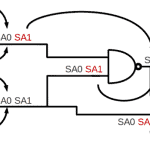
When I introduced you to the Stuck at Fault Model I stated that the size of VLSI devices necessitated the usage of Electronic Design Automation (EDA) tools to support testing.
My first full-time job at IBM exposed me to the world of test and to their EDA tools.
In the mid-1980’s, testing of logic devices relied upon the S@ fault model. Three common software tools included fault simulation, automatic test pattern generation, and fault diagnosis.
This article will provide an introduction to fault simulation as one can view the other two tools as applications built upon a fault simulator. [Read more…]
